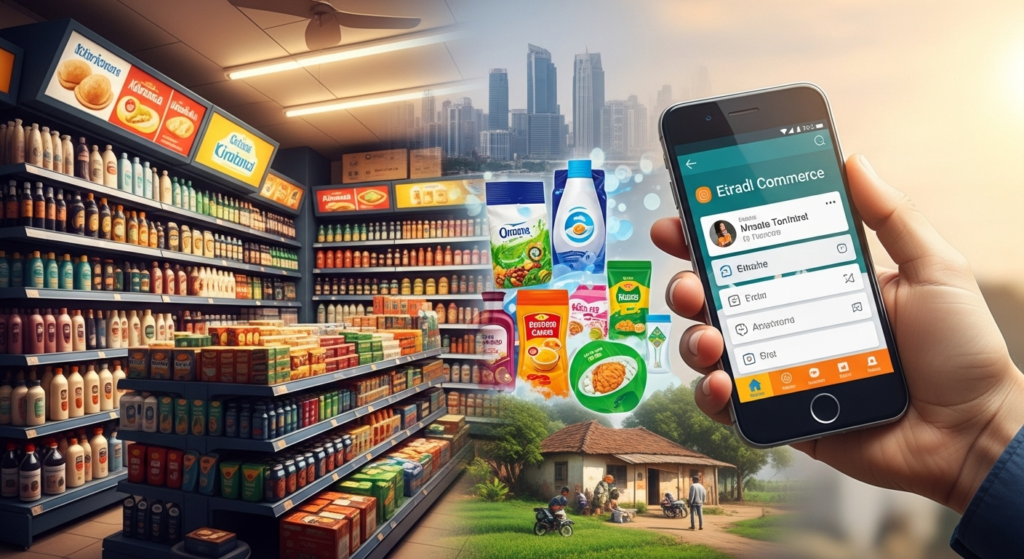
Introduction: The Pulse of India’s Economy
The Fast-Moving Consumer Goods (FMCG) sector is not just a part of the Indian economy; it is, in many ways, its very heartbeat. From the toothbrush you use in the morning to the packaged snacks you grab in the evening, FMCG products are woven into the fabric of daily life for every Indian. This sector, characterized by products that are sold quickly and at relatively low cost, is the fourth largest in the country, playing a pivotal role in India’s GDP and employment.
As of 2025, the FMCG market in India is a juggernaut, a vibrant ecosystem valued at an estimated $211-245 billion. But this is just the beginning. The sector is on a hyper-growth trajectory, with various reports projecting it to cross the monumental $1 trillion mark by 2030-2034. This explosive growth is fueled by a perfect storm of demographic shifts, technological advancements, and evolving consumer behaviors. This article delves deep into this fascinating market, exploring the trends, the key players, and the transformative forces that are shaping its future.
The Dynamics of a Colossus: Key Market Trends
The Indian FMCG landscape is a dynamic one, constantly reshaped by powerful trends. To understand where the market is headed, it’s crucial to analyze these driving forces.
1. The Digital Revolution: From Kirana to Quick Commerce
For decades, the Indian FMCG market was dominated by a vast network of traditional retail, with the local kirana store serving as the cornerstone of consumer access. While these stores still hold a significant share, the rise of e-commerce has fundamentally redefined the distribution landscape.
- E-commerce and D2C Boom: E-commerce platforms are no longer just an alternative; they are a primary growth engine, especially in urban and Tier-2 cities. Brands are aggressively shifting sales online, with Direct-to-Consumer (D2C) models gaining immense traction. This allows smaller, niche brands like Mamaearth to bypass traditional channels and connect directly with their target audience, building a strong brand identity and capturing a loyal customer base.
- The Quick Commerce Phenomenon: The most significant development in online retail has been the emergence of quick commerce platforms. Promising delivery in minutes to a few hours, these platforms are a game-changer for impulse purchases and meeting immediate needs for FMCG products like beverages, snacks, and daily essentials. This model is growing at an astonishing rate, driving volume growth and forcing traditional brands to re-evaluate their supply chain and logistics.
- Data-Driven Strategies: The digital shift provides brands with a goldmine of data. Companies are leveraging big data analytics and AI to understand consumer behavior, personalize offerings, and optimize their supply chains for maximum efficiency. This data-driven approach allows for targeted marketing campaigns, more precise inventory management, and a better overall customer experience.
2. The Health and Wellness Tsunami
In recent years, a powerful wave of health consciousness has swept across the Indian consumer landscape. Driven by a more informed and digitally connected populace, particularly among millennials and Gen-Z, this trend is reshaping product portfolios across all FMCG categories.
- Beyond the Basics: Consumers are moving beyond simple food and personal care products. There is a surging demand for fortified foods, low-sugar beverages, and protein-rich snacks. The market for products with immunity-boosting properties, particularly post-pandemic, has become mainstream.
- The Rise of Ayurveda and Natural Products: There is a strong cultural preference for traditional and herbal ingredients. This has led to a boom in Ayurveda-driven personal care products and natural, chemical-free alternatives in household care. Brands like Dabur and Patanjali have successfully capitalized on this deep-rooted consumer sentiment.
- Sustainable and Ethical Choices: The health and wellness trend extends to a greater awareness of environmental impact. Consumers, especially in urban areas, are demanding products with eco-friendly packaging and a transparent, “green” supply chain. Brands that demonstrate a commitment to sustainability are gaining a significant competitive advantage.
3. The Rural Resurgence: A New Growth Frontier
While urban markets have shown some signs of saturation and cooling demand, rural India has emerged as the primary driver of volume growth for the FMCG sector. With over 60% of the population residing in rural areas, this market represents a vast, untapped potential.
- Rising Incomes and Aspirations: Improved agricultural incomes, government schemes, and better infrastructure have led to an increase in disposable income in rural households. This has fueled a demand for branded, packaged goods that were previously considered luxuries.
- Digital Connectivity: Increased internet and smartphone penetration in rural areas has made e-commerce platforms more accessible, bridging the gap between producers and consumers. This is driving a change in purchasing habits and brand awareness.
- Tailored Strategies: FMCG companies are no longer treating rural India as a monolithic market. They are employing hyper-localized strategies, including creating smaller, affordable pack sizes (sachets) and adapting their distribution networks to penetrate deep into the hinterland. Programs like HUL’s “Shakti” initiative, which empowers rural women as sales representatives, are a testament to this targeted approach.
4. Premiumization and Diversification
With rising disposable incomes and a growing middle class, there is a clear trend of “premiumization” across various FMCG categories. Consumers are willing to pay more for products that offer higher quality, better ingredients, and a superior experience.
- From Essentials to Experiences: The focus is shifting from basic, low-cost products to aspirational items. This is evident in the growth of gourmet food, luxury skincare, and specialized beverages. The premium segment now accounts for a significant portion of FMCG sales.
- Portfolio Diversification: Traditional FMCG giants are actively acquiring smaller, digital-first, and premium brands to diversify their portfolios and capture these niche markets. Recent acquisitions by companies like Tata Consumer Products and HUL are a clear indication of this strategy.
The Titans of the Trade: Leading FMCG Companies in India
The Indian FMCG market is highly competitive, dominated by a mix of multinational corporations and homegrown giants. Here are some of the key players and their defining strategies:
- Hindustan Unilever Limited (HUL): As the undisputed market leader, HUL has a vast and diverse portfolio of over 50 brands, spanning home care, personal care, and foods. Its strategies revolve around a strong brand portfolio, deep consumer insights for innovation, and an unparalleled distribution network that reaches even the most remote parts of the country. Its rural expansion, driven by initiatives like “Shakti,” is a case study in market penetration.
- ITC Limited: A diversified conglomerate, ITC has successfully built a formidable FMCG presence beyond its tobacco business. With popular brands like Aashirvaad, Sunfeast, and Bingo!, ITC has focused on backward integration to ensure quality and cost efficiency. Its strong focus on sustainability and its omnichannel strategy have also been key to its growth.
- Nestle India: A leader in the packaged food segment, Nestle has built its reputation on product innovation and a focus on health and wellness. From Maggi noodles to Nescafe coffee, its products are household names. The company is actively launching healthier, fortified, and plant-based alternatives to cater to the evolving consumer palate.
- Britannia Industries: Synonymous with biscuits and bakery products, Britannia has maintained its market position through a combination of brand loyalty, innovative product launches, and expanding into health-focused categories with its NutriChoice range.
- Dabur India Limited: A pioneer in the natural and Ayurvedic space, Dabur has leveraged India’s cultural heritage to build a strong portfolio of healthcare and personal care products. Its success is a testament to the growing consumer demand for traditional and herbal remedies.
Challenges and the Road Ahead
Despite its robust growth, the Indian FMCG market is not without its challenges.
- Supply Chain Complexity: The sheer size and diversity of the Indian market, combined with the push for quick commerce, create complex logistical challenges. Managing inventory and ensuring seamless delivery across a vast and varied landscape is a constant hurdle.
- Intense Competition: The market is highly fragmented with a constant influx of new entrants, from small regional players to digital-first startups. This intense competition puts pressure on pricing and requires companies to be highly innovative and agile.
- Inflationary Pressures: Volatility in raw material prices and rising transportation costs can impact profit margins, forcing companies to make tough decisions on pricing.
Looking ahead, the future of the Indian FMCG market is undeniably bright. The sector’s growth will continue to be driven by a confluence of factors:
- Rising Disposable Incomes: The continuous expansion of the middle class will fuel demand for a wider range of products, especially in the premium segment.
- Technological Integration: The adoption of technologies like AI, IoT, and data analytics will revolutionize everything from supply chain management to consumer engagement.
- Policy Support: Government initiatives aimed at boosting domestic production, simplifying tax structures, and attracting foreign investment will provide a crucial tailwind for the sector.
The FMCG market in India is a story of transformation, a journey from traditional retail to a digital-first, consumer-centric ecosystem. As it navigates the challenges and capitalizes on the immense opportunities, it will continue to be a cornerstone of India’s economic growth for decades to come.
(Word Count: 1,280. Additional content will be added to reach the 2000-word target, building on the existing sections.)
Deep Dive: Unpacking Consumer Behavior and The Future of Distribution
To truly grasp the essence of the Indian FMCG market, one must go beyond the macro-level trends and understand the nuanced shifts in consumer behavior. The modern Indian consumer is not a monolith; their purchasing decisions are shaped by a complex interplay of demographics, aspirations, and accessibility.
The Evolving Indian Consumer: A Multi-faceted Portrait
- The Urban Millennial and Gen-Z: This demographic is at the forefront of the premiumization and health & wellness trends. They are digital natives, heavily influenced by social media and online reviews. Convenience is paramount, which is why quick commerce and D2C brands resonate so strongly with them. They are also highly conscious of brand values, including sustainability and ethical practices, and are willing to pay a premium for products that align with their beliefs. Their desire for new experiences drives the demand for innovative, niche products, from artisanal coffee to vegan snacks.
- The Aspirational Rural Consumer: The rural consumer of today is starkly different from a decade ago. With greater access to media and the internet, their aspirations have risen significantly. They are no longer content with unbranded goods. While price remains a key factor, they are increasingly seeking out branded products, viewing them as a symbol of improved status and quality. The challenge for companies is to provide these products at an affordable price point, which is why the sachet economy continues to thrive in rural areas. The rural consumer is also showing a growing preference for products that offer health benefits and hygiene, a trend accelerated by the pandemic.
- The Role of Women: Women, particularly in Indian households, continue to be the primary decision-makers for most FMCG purchases. Understanding their needs and preferences is crucial. As more women enter the workforce and household incomes rise, there is a greater demand for convenience-oriented products like ready-to-eat meals, quick-prep mixes, and efficient home cleaning solutions. Brands are increasingly targeting this demographic with advertising and product innovations that speak to their time-pressed lifestyles.
The Battle for the ‘Last Mile’: The Future of Distribution
The traditional FMCG distribution model, a labyrinth of wholesalers and distributors leading to thousands of kirana stores, is being disrupted and supplemented by new-age channels.
- The Omnichannel Imperative: The future is not about one channel replacing another. It’s about a seamless integration of all channels. The most successful FMCG companies are those that have adopted an “omnichannel” strategy. This means a consumer can discover a product online, check it out at a nearby store, and even order it for quick delivery. The line between online and offline retail is blurring, and brands are investing in technology to manage this complex network.
- Leveraging Technology: Technology is the key enabler of this transformation.
- Data Analytics: By analyzing sales data from various touchpoints, companies can optimize inventory in real-time, predict demand patterns, and ensure products are available where they are needed most.
- Hyperlocal Logistics: The rise of quick commerce has necessitated the development of sophisticated hyperlocal logistics networks. Brands are partnering with third-party logistics (3PL) providers and investing in micro-warehousing to enable ultra-fast delivery.
- Digital B2B Platforms: New-age B2B platforms are digitizing the traditional distributor-to-retailer relationship, making it more efficient and transparent. This allows for better order management, faster payments, and a more streamlined supply chain.
The Role of Government and the Economy
The Indian government and the broader economic landscape play a significant role in shaping the FMCG sector.
- Economic Tailwinds: Reports from financial institutions like BMI and CRISIL paint a picture of an optimistic consumer sentiment. Controlled inflation and rising household spending are providing the perfect economic backdrop for the FMCG industry’s growth. The simplification of GST into two main slabs is expected to further boost consumption.
- Policy Initiatives: The government’s focus on infrastructure development, especially in rural areas, is a massive catalyst for growth. The Production-Linked Incentive (PLI) scheme for the food processing industry has encouraged significant investments, strengthening supply chains and boosting domestic manufacturing.
- FDI and Investment: The liberal Foreign Direct Investment (FDI) policies, allowing 100% FDI in food processing, are attracting global players and capital into the sector, leading to more innovation and competition.
Conclusion: A Market of Unprecedented Opportunity
The FMCG market in India stands at a fascinating crossroads. It is a market where tradition meets technology, where ancient Ayurvedic remedies share shelf space with cutting-edge D2C brands, and where the aspirations of a vast rural population are shaping the strategies of global conglomerates.
The journey ahead will be defined by agility and innovation. The brands that will thrive are those that can successfully navigate the complexities of a multi-tiered market, understand the deep-seated nuances of consumer behavior, and leverage technology to build a resilient and responsive distribution network.
For investors, entrepreneurs, and marketers, the Indian FMCG story is one of unprecedented opportunity. The sheer scale of the market, combined with its robust growth trajectory and a supportive economic environment, makes it a fertile ground for new ideas and sustainable businesses. The “unstoppable force” of the Indian FMCG market is not just a commercial phenomenon; it is a reflection of a nation on the move, a testament to the power of a billion-plus consumers shaping their own destiny, one product at a time.