Written and edited by Chandan Bhattacharjee
Editor, IndiFinance | MBA, Economics (Hons.) | Indian | Writes & Teaches Finance, Marketing, Business, Technology & AI
Independent editorial. No paid placements.
One in three Indian students who applied for a US student visa last year walked out of the consulate without one. Actually — it is far worse than that. The F-1 student visa rejection rate for Indian applicants has hit approximately 61% recently. Let that number sink in for a moment.
If you are planning to pursue a Master’s or PhD in the US, the rules have changed dramatically in 2026. And most applicants — buried in GRE prep and SOP drafts — do not know it yet. This is your honest, no-fluff briefing on how the evolving India-US relationship is directly impacting your study-abroad dream, your wallet, and your future career. Lets’s delve into the future of US Student Visa for Indian students
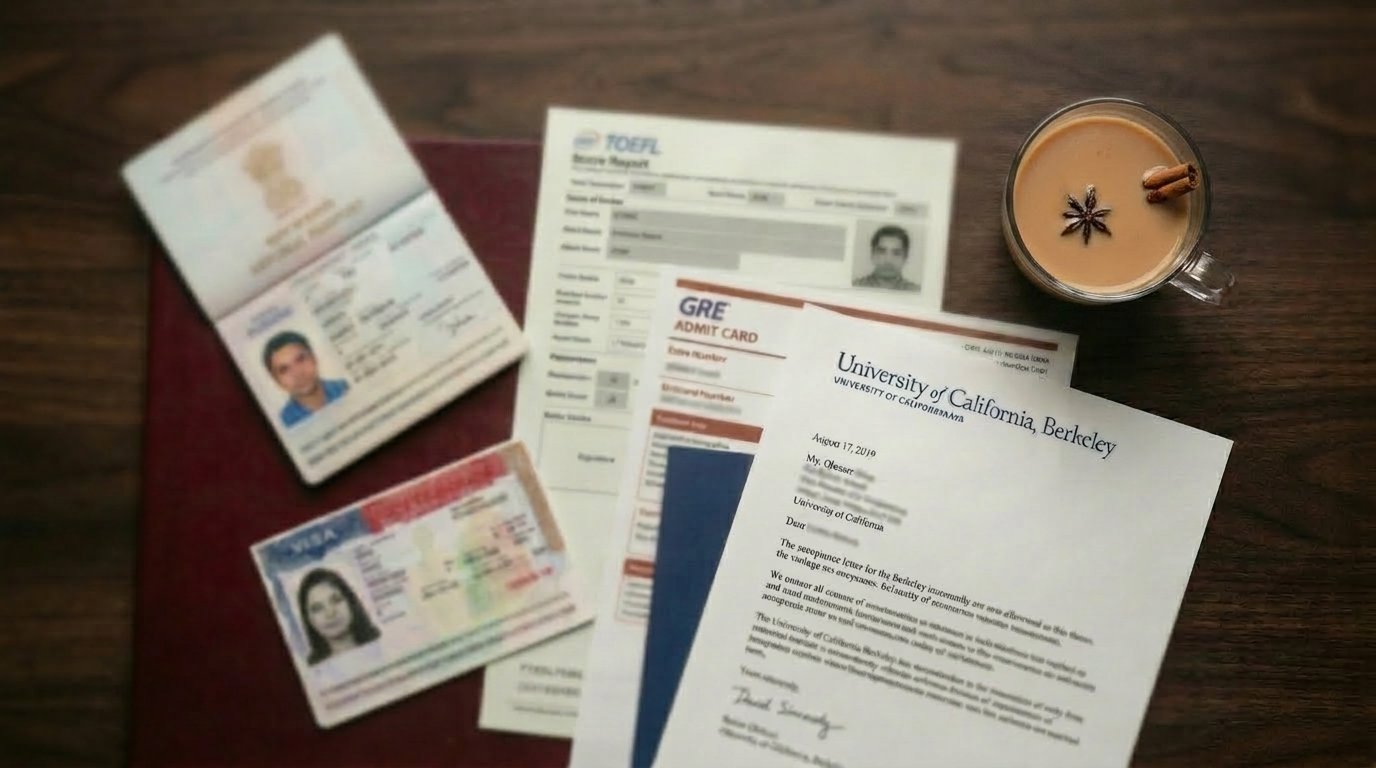
The 61% Rejection Surge: What Is Really Happening at the Consulate
The spike in F-1 visa rejections is not random. US consular officers are now applying far stricter scrutiny under Section 214(b) of the Immigration and Nationality Act. In plain terms: you will be presumed to have immigrant intent unless you can convincingly prove you plan to return to India after your studies. And proving that just got significantly harder.
Here is what most students are not talking about. The US government has rolled out expanded social media and digital background checks for all visa applicants. Your Instagram history, old tweets, LinkedIn activity, and even WhatsApp group memberships can now be part of the screening process. One ambiguous post — even from five years ago — can flag your application for additional review or outright rejection.
Consular officers under the current regime are specifically looking for:
- Strong ties to India — documented property ownership, immediate family, a credible job offer, or a concrete return plan
- Consistent, long-standing financial history — not a sudden surge of funds right before the interview
- A clear, cohesive academic and career narrative that makes your study plan logically inevitable
- A clean, low-risk digital footprint across every public social platform
Here is a critical financial warning most counsellors forget to mention: if ₹30–50 lakh suddenly appeared in your bank account two or three weeks before your visa interview, expect hard, uncomfortable questions. Consular officers are trained to spot this pattern — large fresh deposits that do not match your financial history are a textbook red flag. Your funds should ideally be consistently parked for at least 6–12 months before you sit across from that officer. That is what a genuine financial sponsor looks like to a trained eye.
The February 2026 US-India Trade Deal: Hope on the Horizon?
Here is the nuance most news articles completely miss. In February 2026, the US and India signed a significant trade reset agreement — a development that dominated financial headlines but whose student-focused implications remain underexplored by most education consultants.
This deal does not directly change any immigration or visa law. But what it does — and this matters enormously for students planning 12 to 24 months ahead — is signal meaningful bilateral institutional trust between the two governments. When two economies are deepening trade ties, their universities, research institutions, and corporate ecosystems have stronger reasons to collaborate and facilitate each other’s talent pipelines.
Analysts project this reset will stabilize institutional confidence and gradually improve student mobility conditions over the next 12 to 24 months. For Fall 2027 or 2028 applicants, the macro environment may be measurably friendlier. For Fall 2026? You are navigating a transitional period. Prepare as though goodwill alone will not smooth over weak documentation — because right now, it will not.
The Flight to Quality Trend: Why Ivy League Applications From India Are Actually Up
Here is something genuinely counterintuitive. Overall US university enrollments from India dropped by approximately 20% in the last admissions cycle. Thousands of students reconsidered. Yet at exactly the same time, applications from India to Ivy League and Top 30 universities have actually increased for the 2026–27 cycle. Wrap your head around that.
The middle tier is getting squeezed out. Students who once targeted decent regional state universities are now either pivoting to Europe or upgrading their ambitions entirely. The logic is ruthlessly rational: if you are going to face a 61% rejection risk, a ₹1 crore investment, and years of logistical complexity — you might as well aim for a name that makes every single rupee count at the consulate and in the job market.
Imagine Priya, a 24-year-old from Hyderabad with a 1520 GRE score. She received three admission offers — one from a Top 10, one from a solid Midwest state school, and one from a Canadian institution. Her CA father’s advice was blunt: if you are going all-in, go all-in. She chose MIT. At the consulate, her offer letter — combined with spotless financial documentation — made for a compelling case that a letter from a lesser-known school simply could not have matched.
The lesson: in a high-rejection environment, institutional prestige is not just vanity. It carries real, practical weight at the visa window.
The Duration of Status Rule That Could Cost You Lakhs Mid-Degree
This is the proposed change that most applicants have not heard about — and for PhD aspirants specifically, it is potentially serious enough to change your entire financial plan.
The US is proposing to replace the traditional Duration of Status (D/S) model with a fixed 4-year admission cap for F-1 visa holders. Under the current system, your F-1 status is valid for the entire duration of your academic program — however long it takes. Under the proposed change, you would receive a fixed 4-year window, after which you would need to formally file for a USCIS extension. That filing is neither free nor guaranteed.
Why does this hit Indian students especially hard?
- STEM PhDs routinely take 5 to 7 years — a 4-year cap means mandatory mid-program extension paperwork with very real risks
- OPT periods could be disrupted during the extension filing process, creating gaps in your legal status
- USCIS extension applications involve legal fees that can easily reach ₹1–2 lakh per filing
- Extensions are not automatically guaranteed — a denial mid-PhD would be catastrophic for your academic and professional future
As of mid-2026, this rule is still proposed and not yet enacted. But if you are starting a long-duration PhD program, factor this scenario into your financial and legal planning now. Speak with a qualified immigration attorney before you commit to enrolment — not after you have already paid tuition.
The STEM OPT Advantage: Three Shots at the H-1B Lottery
Despite everything above, here is the single most powerful reason why the US remains the #1 destination for Indian engineers and tech professionals — and why the math often still wins decisively.
After completing a US STEM degree — Computer Science, Data Science, ECE, Mechanical Engineering, and dozens of other qualifying fields — you receive 36 months of Optional Practical Training (OPT). That is three full years of legal work authorization in the US, without needing an H-1B visa to survive.
- The H-1B lottery has roughly a 14–20% selection rate per year
- With 3 years of STEM OPT, you get three separate lottery entries across three annual cycles
- Your cumulative probability of selection across three attempts pushes past 40–50%
No other major study destination offers this combination: world-class universities, the planet’s largest tech job market, and a statutory 3-year runway to convert your education into permanent work sponsorship. Germany and Canada have their own work pathways — but neither rivals STEM OPT for Indian tech career ROI at this scale.
Is the ROI Still Worth It? The Real Numbers for 2026
Let us have the money conversation most counsellors avoid. A STEM Master’s in the US typically costs $40,000–$65,000 per year in tuition alone. Add living expenses of $15,000–$20,000 annually. For a standard 2-year MS, you are looking at a total outlay of roughly $110,000–$170,000 — approximately ₹91 lakh to ₹1.4 crore at mid-2026 exchange rates. For most Indian families, that means a significant education loan — often the single largest financial bet they will ever make.
- No Cosigner? No Problem: How International Students Actually Get US Student Loans No US relative to cosign your loan? Here's the real, lender-by-lender breakdown of how international students…
- The 401(k) Match: How Skipping ‘Free Money’ Quietly Costs You Six Figures One in four workers skip part of their 401(k) match — handing away a guaranteed return.…
- Roth vs. Traditional IRA: The Quiet Decision That Changes Everything Roth or Traditional IRA? It feels like a tiny box to tick when you open an…
- Stop Losing Money to Inflation: 5 Proven Ways to Protect Your Purchasing Power Written and edited by Chandan Bhattacharjee Editor, IndiFinance | MBA, ... Read more
| Metric | Typical Figure (2026) |
|---|---|
| Annual STEM MS tuition (US) | $40,000 – $65,000 |
| Annual living expenses | $15,000 – $20,000 |
| Total 2-year MS investment | ~₹91 lakh – ₹1.4 crore |
| US STEM starting salary | $70,000 – $140,000 per year |
| Equivalent in INR (approx.) | ₹58 lakh – ₹1.16 crore per year |
| Estimated investment recovery | 1.5 – 3 years |
If you land a solid tech role — and with 3 years of STEM OPT you have a genuine, legally protected runway to do exactly that — the ROI is extraordinary. The math works. But only if you choose a program with real placement records, graduate with market-ready skills, and actually secure employment. A degree from a low-ranked university with no industry connections will not deliver these numbers. That is the honest truth.
Europe Is Actively Recruiting You: Germany, France, and the Real Alternatives
While the US tightens its consular scrutiny, Germany, France, and the Netherlands have been quietly and aggressively courting the Indian students being deterred by US visa complexity — and they are winning a growing share of that talent.
Germany: Public universities charge virtually zero tuition — many top engineering and sciences programs cost €0, with semester administrative fees of just €150–350. English-taught Master’s programs are expanding rapidly. Germany’s post-study visa allows up to 18 months of job-search time after graduation, and the country’s manufacturing and engineering sector is hungry for skilled graduates.
France: Engineering institutions offer full-degree programs at €3,000–8,000 per year. France has been actively targeting Indian students with dedicated scholarship tracks and a favourable bilateral visa pathway that moves far faster than US consular queues.
The honest trade-off every Indian family must weigh:
- Europe path: Near-zero to low tuition, starting salaries of €40,000–65,000 per year, smaller tech ecosystem, smoother visa process
- US path: ₹91 lakh–₹1.4 crore total cost, starting salaries of $70,000–140,000 per year, STEM OPT runway, the world’s largest tech job market
For an Indian student with clear H-1B ambitions, a strong STEM profile, and the financial capacity to absorb the risk — the US still wins on lifetime income upside. But for those who want a globally respected education without placing a ₹1 crore bet on an uncertain visa outcome? Europe is no longer a consolation prize. It has become a genuinely strategic alternative.
Your Fall 2026 Timeline: You May Already Be Running Late
Blunt truth: if you are targeting Fall 2026 admission and have not started your visa process, time is critically short. Visa appointment slots at Indian consulates in Mumbai, Delhi, Chennai, Hyderabad, and Kolkata currently carry 4 to 6 month wait times. This is not a process you can sprint through in a few weeks before departure.
- Receive your I-20 from your university immediately upon admission — this is your foundational visa document
- Pay the SEVIS fee ($350) the same day you receive the I-20 — do not sit on this
- Book your visa appointment within 24 hours of paying SEVIS — appointment slots are genuinely scarce for Fall 2026
- Assemble 6–12 months of clean, stable bank statements — ideally already prepared before this step
- Audit your social media across all platforms — Instagram, X, LinkedIn, Facebook, YouTube comments — and archive or delete anything politically or personally ambiguous
- Compile your India ties documentation: property papers, family employment letters, asset records, and any post-graduation job leads in India
- Research and rehearse your F-1 visa interview answers, especially around your post-graduation return plans
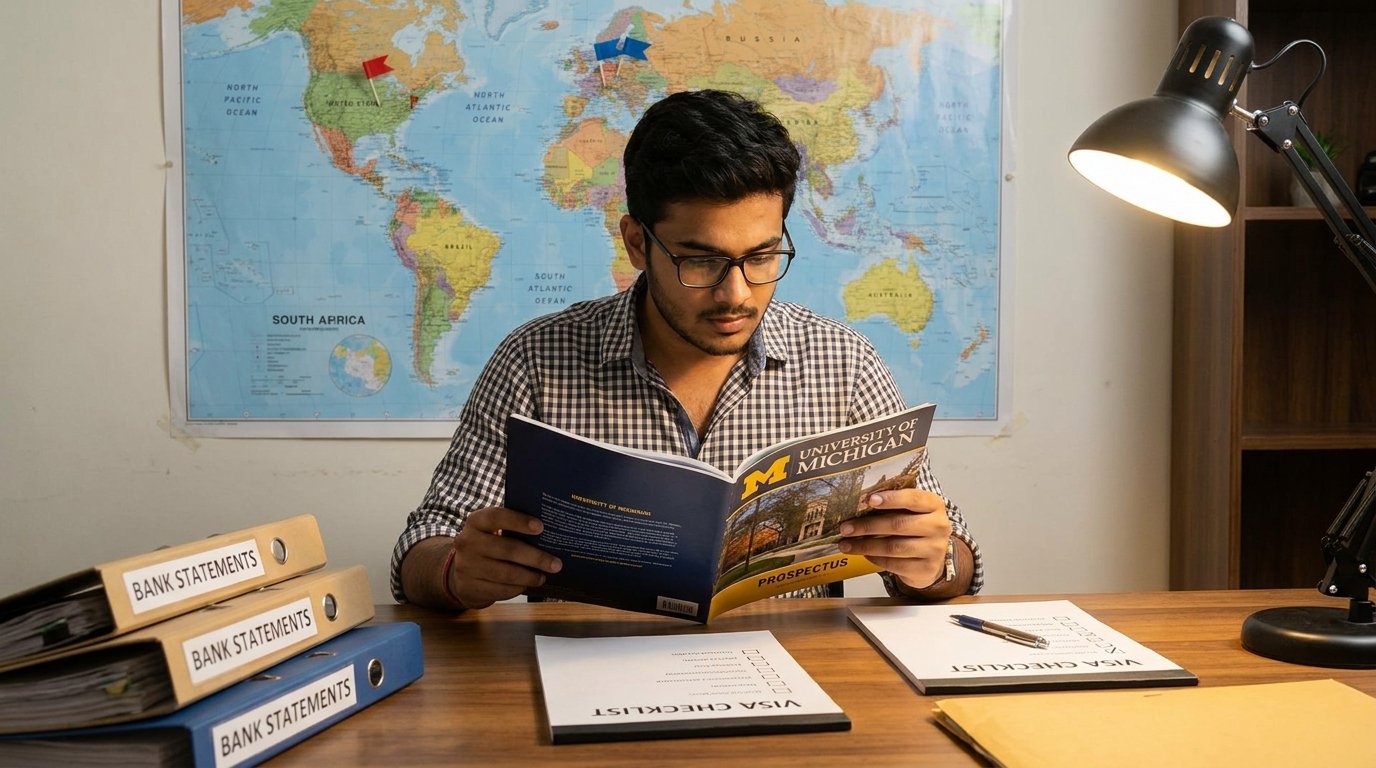
Things Nobody Tells You: The Mistakes That Quietly Kill Applications
These are the quiet killers — the errors your seniors made but never posted about on LinkedIn.
- Sudden large deposits: Parking ₹30–50 lakh in your account weeks before the interview is the single biggest red flag under current scrutiny. Consular officers examine transaction histories carefully. Funds must reflect a stable, consistent history of at least 6–12 months — large sudden inflows are flagged as ‘window dressing’ every single time.
- Vague post-study plans: ‘I will figure it out’ is not an answer at a US consulate in 2026. You need a concrete, rehearsed narrative: ‘I plan to return to India and work in [specific field] at [type of company or sector].’ Rehearse it until it sounds natural, not recited.
- Weak ties to India: If your parents have emigrated, your family owns no property in India, and you have no job prospects lined up back home — your Section 214(b) risk is very high. Work proactively to document every credible connection to India months before your interview.
- Choosing low-ranked schools purely for RA or TA funding: Consulates are very familiar with this pattern. A funding letter from an obscure university with questionable acceptance standards raises more suspicion than it resolves. Aim for programs with genuine academic credibility and placement track records.
- Neglecting social media hygiene: That political meme from 2021, or that heated comment on a news article from 2020 — digital checks are real and they go back years. Review and clean up every public profile well before you submit your visa application.
- Leaving the visa process to the last minute: With 4–6 month wait times at consulates across India, there is no ‘last minute’ in 2026. The clock starts the moment you receive your admission letter — not the month before your flight.
Your 7-Step Action Plan: Start This Week
- Audit every social media profile today. Instagram, X (Twitter), LinkedIn, Facebook, YouTube comment sections. Archive or permanently delete anything that could be misread — politically, personally, or contextually. Do this before you apply anywhere, not the week before your interview.
- Build and protect your financial paper trail right now. Ensure funds reflect a stable history of 6–12 months in your account or your sponsor’s account. If additional funds are needed to meet financial requirements, begin this process immediately so the money has time to season properly.
- Document your India ties in a dedicated folder. Property documents, parents’ employment letters, family asset records, and any credible post-graduation job leads in India. This is the single most persuasive material you can bring to a Section 214(b) scrutiny interview.
- Verify your program is on the STEM OPT designated degree list. Check the US Department of Homeland Security’s official list before submitting a single application. This is non-negotiable if the 36-month OPT runway is part of your career plan — and it absolutely should be.
- Book your visa slot the moment you receive your I-20. Not after the weekend. Not after Diwali. Not after you tell your relatives. The same day you receive the I-20. Slots are filling weeks ahead in major Indian cities.
- Consult a registered immigration attorney if you have any complications at all. Prior visa rejections, police records, complex sponsor arrangements — these require professional guidance. Do not rely on YouTube channels or college WhatsApp groups for these situations.
- Build a genuine Plan B simultaneously. Research one European alternative — Germany or France — and one Canadian option in parallel. A real backup reduces desperation from your US interview. And a confident, unhurried applicant reads very differently to a consular officer than a desperate one.
Frequently Asked Questions
What is the current F-1 visa rejection rate for Indian students?
The F-1 student visa rejection rate for Indian applicants has hit approximately 61% recently. This surge is driven by stricter application of Section 214(b) immigrant intent standards, expanded social media and digital background checks, and heightened consular scrutiny of financial documentation submitted by Indian applicants.
Will the February 2026 US-India trade deal help Indian students get visas more easily?
Not directly or immediately. The February 2026 trade reset does not change US immigration law. However, it is expected to improve bilateral institutional trust and gradually improve student mobility conditions over the next 12 to 24 months. For Fall 2026 applicants specifically, the on-ground impact remains minimal — prepare rigorously as though the deal does not exist.
What is STEM OPT and why is it so important for Indian graduates?
STEM OPT (Optional Practical Training) grants graduates of qualifying STEM degree programs 36 months of post-study work authorization in the US without requiring an H-1B visa. Across three years of STEM OPT, you receive three separate H-1B lottery chances, pushing your cumulative selection probability to roughly 40–50%. No other major study destination offers an equivalent advantage for Indian tech career trajectories.
Should I consider Germany or France instead of the US in 2026?
If cost is your primary concern, Germany (effectively zero tuition at public universities) and France (full-degree programs at €3,000–8,000 per year) are genuinely strong alternatives. For maximum long-term financial ROI in the tech sector — specifically leveraging STEM OPT and multiple H-1B lottery chances — the US still offers a significantly higher income ceiling. Your decision should honestly depend on your financial capacity, risk tolerance, and long-term career ambitions.
What is the proposed Duration of Status change and does it affect Indian students?
The US is proposing to replace the open-ended Duration of Status with a fixed 4-year admission cap for F-1 students. This primarily affects PhD students and those in extended OPT periods, who would need to file USCIS extension applications at significant legal and financial cost, with no guarantee of approval. The rule is still proposed as of mid-2026 — but PhD aspirants should consult an immigration attorney and plan for this scenario now.
How do I prove strong ties to India at my F-1 visa interview?
Bring documented proof of property ownership (yours or your parents’), family employment letters, a demonstrable history of stable financial assets in India, and — if possible — a conditional job offer or letter of intent from an Indian employer for after your graduation. The goal is to leave the consular officer with absolutely no doubt that India is your home base and your intended destination after completing your studies.
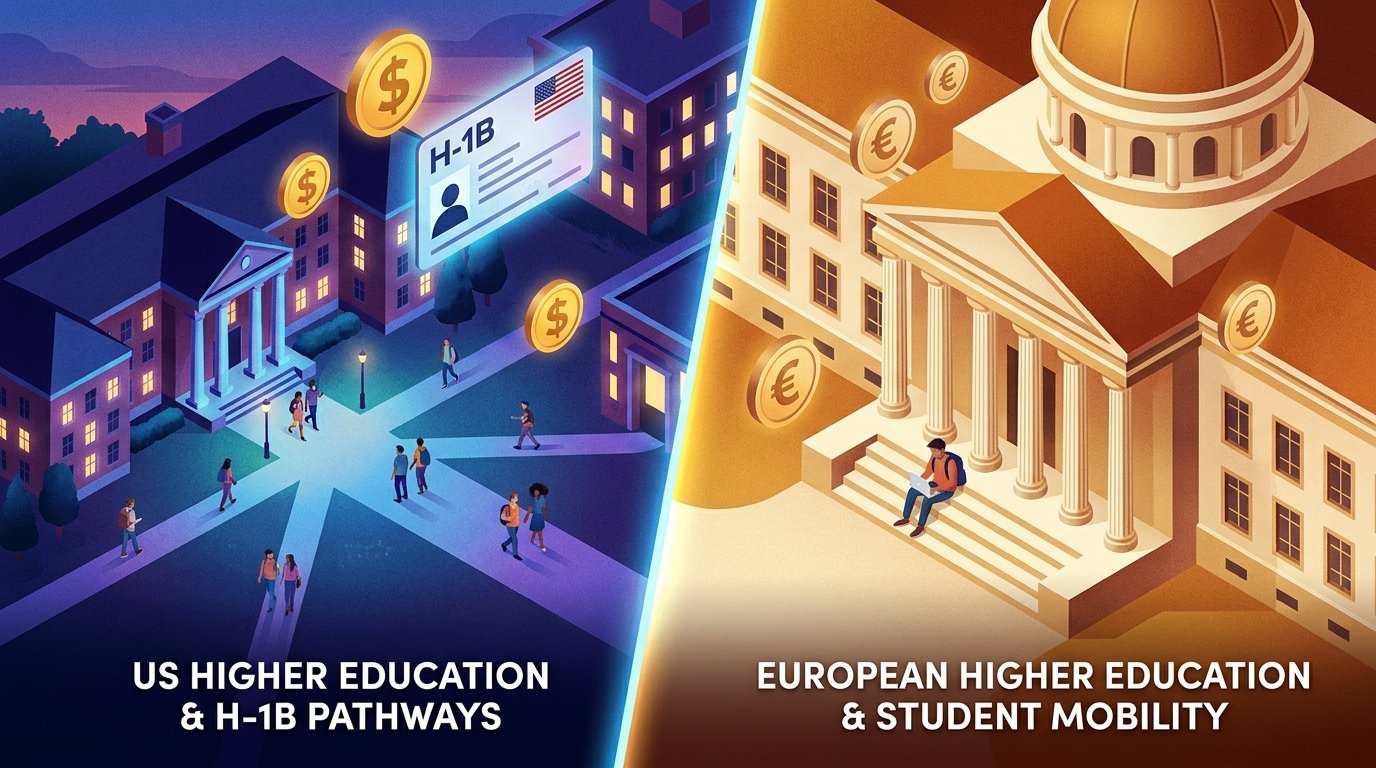
The Bottom Line: Your Dream Is Not Dead — It Just Demands More From You Now
The dream of an American education has not died. It has simply become more demanding — and that is not entirely a bad thing. The students who prepare thoroughly, choose academically credible programs, document their finances with honesty and patience, and walk into the consulate with a clear and compelling story are still receiving their F-1 visas. They are still landing six-figure tech salaries in San Jose and Seattle. The numbers still work — for the ones who do the work.
The US student visa for Indian students is unquestionably harder to obtain in 2026. But the reward for those who navigate it correctly remains extraordinary. Do not let the 61% rejection headline paralyze you. Let it sharpen you. Prepare early, document everything, choose the right program, and walk in with confidence — not desperation.
Whether you choose Boston, Berlin, or Bengaluru — move with intention, back every decision with solid data, and build your safety net before you need it. That is the IndiFinance way. Want to go deeper? Explore our guides on education loans for studying abroad and how to plan your finances before moving abroad to make sure your financial foundation is as strong as your application file.