
Written and edited by Chandan Bhattacharjee
Editor, IndiFinance | MBA, Economics (Hons.) | Indian | Writes & Teaches Finance, Marketing, Business, Technology & AI
Independent editorial. No paid placements.
Here’s a number your HR will never print on your appraisal letter — yet it decides your raise anyway.
It’s called revenue per employee. And it quietly answers one brutal question: are you worth more than you cost?
Most people in India have never heard of it. The ones who have? They negotiate better salaries, survive layoffs, and get promoted faster.

In 2025-26, Indian companies are obsessed with one word: efficiency. Hiring is slower. AI is doing more. Bosses keep asking, “Do we really need this headcount?” When that’s the mood, knowing how the company measures your value isn’t optional. It’s survival.
What Is Revenue Per Employee, Really?
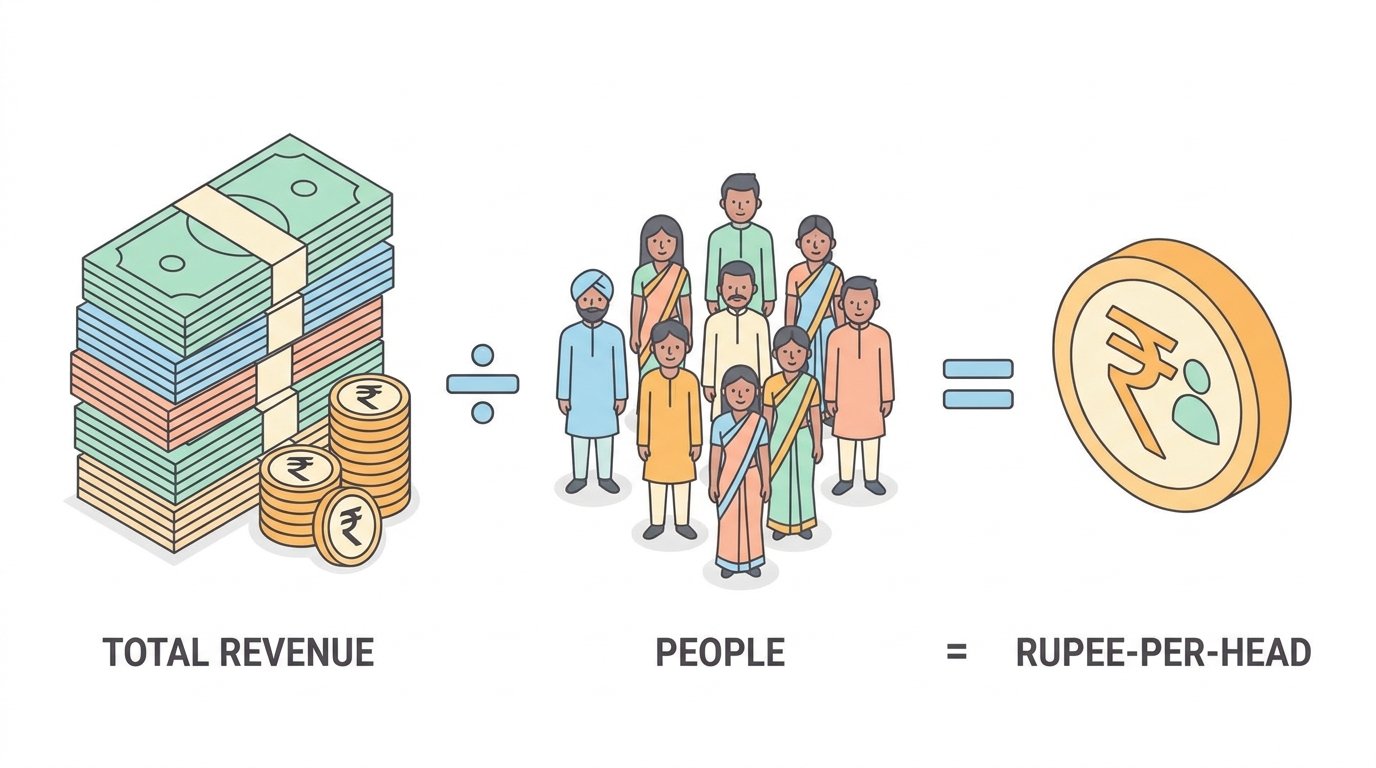
Strip away the jargon and it’s simple. Revenue per employee is how much money the company earns for every single person on its payroll.
Think of your company as a kitchen. The total food sold is the revenue. The number of cooks, waiters and helpers is the headcount. Revenue per employee is how much each person, on average, helped sell.
If that number goes up, the company is getting more out of each person. If it falls, leadership starts looking at where the dead weight is. You do not want to be confused with dead weight.
The Revenue Per Employee Formula (With a Desi Example)
The math is school-level easy. The revenue per employee formula is:
Revenue Per Employee = Total Annual Revenue ÷ Total Number of Employees
Imagine TechBytes, a mid-size IT firm in Pune. It earns ₹100 crore in a year and has 500 employees.
₹100 crore ÷ 500 = ₹20 lakh per employee.
So on paper, the company expects roughly ₹20 lakh of value from each head. If your total cost to company is ₹12 lakh, you’re “profitable” for them. If you cost ₹18 lakh and add ₹8 lakh of visible value, you’re a question mark in the next review.
Why This Number Quietly Decides Your Appraisal
Here’s the part nobody says out loud. Your appraisal is rarely about how hard you worked. It’s about the gap between what you cost and what you bring.
Meet Ravi, a 28-year-old software engineer in Bengaluru earning ₹80,000 a month. Ravi works 11-hour days and feels exhausted. But most of his work is internal — fixing small bugs nobody outside the team notices.
His teammate Anjali earns the same, works fewer hours, but ships features that directly help the sales team close deals. Come appraisal season, Anjali gets the bigger hike. Same salary, same title — very different revenue per employee math.
The lesson is uncomfortable but freeing: stop trying to look busy. Start trying to be valuable.
- AI for Everyday Office Works: How I Stopped Working Harder and Started Working Smarter Written and edited by Chandan Bhattacharjee Editor, IndiFinance | MBA, ... Read more
- How to Build Discipline: 10 Core Habits of Successful Entrepreneurs Written and edited by Chandan Bhattacharjee Editor, IndiFinance | MBA, ... Read more
- Why Budgeting Isn’t Boring – It’s Freedom Written and edited by Chandan Bhattacharjee Editor, IndiFinance | MBA, ... Read more
- 10 Daily Habits of Financially Successful People Written and edited by Chandan Bhattacharjee Editor, IndiFinance | MBA, ... Read more
What “Good” Revenue Per Employee Looks Like in India
This number varies wildly by industry. A consulting firm runs lean, so each head must earn a lot. A factory or large IT services company spreads revenue across thousands of people, so per-head numbers look smaller. Treat the figures below as rough, illustrative ranges — not gospel.
| Sector | Typical revenue per employee (illustrative) |
|---|---|
| IT services | ₹15–30 lakh |
| Product / SaaS startups | ₹40 lakh–₹1 crore+ |
| Banking & NBFC | ₹50 lakh–₹1.5 crore |
| Manufacturing | ₹20–50 lakh |
| Retail & QSR | ₹8–20 lakh |
The point isn’t the exact figure. It’s the direction. Roles closer to revenue — sales, product, billing clients — usually carry higher per-head numbers and, surprise, often command higher salaries too.
7 Smart Ways to Increase Your Revenue Per Employee
You can’t control the company’s total revenue. But you can absolutely raise your share of it. Here’s how to increase revenue per employee contribution from your own seat.
- Move closer to the money. Volunteer for projects that touch clients, sales, products, or cost savings. Revenue-adjacent work gets noticed first.
- Trade hours for outcomes. Don’t say “I worked all weekend.” Say “I cut the reporting time from 3 days to 3 hours.” Outcomes sell; effort doesn’t.
- Automate your boring tasks. If you spend 6 hours a week on manual Excel work, build a template or learn a tool. That freed time becomes higher-value output.
- Upskill in one high-leverage skill. Data, AI tools, a client-facing skill, or a niche your company is desperate for. One sharp skill beats ten shallow ones.
- Reduce the costs you create. Fewer reworks, fewer escalations, fewer “can you redo this” emails. Lower cost is the same as more revenue, mathematically.
- Make your impact visible. Keep a simple “win log.” Numbers, dates, rupees saved or earned. Most great work is invisible because nobody documents it.
- Help the team win, not just yourself. Lift colleagues, share what you automate. Managers promote people who raise the whole team’s output.

Things Nobody Tells You
A few hard truths before you build your plan:
- Busyness is a trap. Looking overworked feels virtuous but adds zero to the revenue math. Calm and high-impact beats frantic and invisible.
- Loyalty isn’t a value metric. Ten years of service won’t save you if your per-head value has gone flat. Keep growing your contribution every single year.
- Your salary is a cost line. The day your value clearly exceeds your cost, raises become easy to argue. Until then, every negotiation is uphill.
- Job-hopping without value-hopping fails. A new company just inherits the same flat contribution. Raise the value first, then switch for a premium.
Your 7-Day Action Plan
Reading is nice. Doing is what changes your bank balance. Start this week:
- Day 1: Estimate your company’s revenue per employee using the formula. Annual report or a quick Google search will help.
- Day 2: List everything you did last month. Mark each as “revenue-related” or “internal only.”
- Day 3: Pick one boring recurring task and find a way to automate or speed it up.
- Day 4: Start a “win log” — a simple note with dates, numbers, and rupee impact.
- Day 5: Ask your manager one question: “What outcome would make the biggest difference to the team this quarter?” Then aim at it.
- Day 6: Choose one high-leverage skill and book 30 minutes of learning daily.
- Day 7: Build a parallel income muscle — a SIP, a side skill, an emergency fund — so your finances never depend on one appraisal.
Frequently Asked Questions
Is revenue per employee the same as profit per employee?
No. Revenue per employee measures money earned per head; profit per employee subtracts costs first. Revenue is easier to find and is the more common benchmark, but profit per employee is the sharper measure of true efficiency.
How do I find my company’s revenue per employee?
For listed companies, check the annual report for total revenue and total employees, then divide. For private firms, news articles, the company website, or rough estimates from your leadership’s town halls can give you a ballpark.
Does a high revenue per employee mean better salaries?
Usually, yes. Companies with high per-head revenue have more room to pay well and reward top performers. But it’s a trend, not a guarantee — culture and management decide how that surplus is shared.

I’m in a support role with no direct revenue. Am I doomed?
Not at all. Support roles raise their value by cutting costs, reducing errors, and freeing up revenue-makers to do more. Frame your work in those terms — saved time and saved money count just like earned money.
Should I quit if my company’s number is falling?
Don’t panic-quit. First raise your own contribution and visibility. A falling company number is a signal to build an emergency fund and side income, then move when you’re holding a stronger hand, not out of fear.
The Bottom Line
You don’t need to run the company. You just need to make sure the company earns more because you’re on the payroll than it would without you.
Master that idea, and revenue per employee stops being scary corporate jargon. It becomes your personal scoreboard — one you can keep pushing higher every quarter, raise after raise.
Now go build that win log, sharpen one skill, and start a simple SIP so your money grows even while you sleep. Then read our guide on negotiating your next salary hike and turn all this value into real rupees.