Written and edited by Chandan Bhattacharjee
Editor, IndiFinance | MBA, Economics (Hons.) | Indian | Writes & Teaches Finance, Marketing, Business, Technology & AI
Independent editorial. No paid placements.

You open Pinterest looking for dinner ideas and cute closet hacks.
Meanwhile, someone else opens the exact same app and quietly collects a few thousand dollars a month from it.
The difference isn’t luck or a huge following. It’s a system, and it has a name: Pinterest affiliate marketing.
Here’s why this matters right now. As of early 2026, Pinterest has grown to more than half a billion monthly active users, and its own reported figures show record highs. Most of those people don’t come to argue in the comments. They come to plan and to buy. Roughly 85% of weekly users have made a purchase based on a pin. That’s a river of buyer intent, and affiliate marketing is one of the simplest legal ways to dip a bucket in.
Let’s talk it through, coffee-in-hand, like I’m your slightly-obsessed older sibling who already made the mistakes so you don’t have to.
What Pinterest Affiliate Marketing Actually Is
Strip away the hype and it’s just this: you recommend a product, someone clicks your special link, they buy, and you earn a commission. No inventory. No customer service. No shipping angry packages.
The magic is where you’re doing it. Pinterest isn’t really social media. It’s a visual search engine wearing a social-media hoodie. People type in what they want, and Pinterest shows them ideas.
Around 96% of top Pinterest searches are unbranded. That means people search things like “small kitchen organization” or “budget travel outfits,” not a specific brand. They’re wide open to a suggestion, and that suggestion can be yours.
Compare that to Instagram or TikTok, where you’re interrupting someone mid-scroll. On Pinterest, you’re answering a question they already typed. That’s why a single good pin can send clicks for months, sometimes years, after you post it.
On most platforms, content dies in 48 hours. On Pinterest, a good pin is a tiny employee that keeps clocking in while you sleep.
Do You Actually Need a Blog? (The Honest Answer)
This is the question that stops most beginners. Good news: as of 2026, Pinterest allows direct affiliate links in organic pins. So technically, no, you don’t need a website to start.
But “you can” and “you should” are different sentences.
You have two real paths, and picking the right one changes everything about how fast and how safely you grow.
| Approach | Direct affiliate link | Bridge page (blog / landing page) |
|---|---|---|
| Setup speed | Instant—paste the link | Slower—needs a page first |
| Cost to start | $0 | Low (domain + hosting or free builder) |
| Conversion rate | Usually lower (cold click) | Usually higher (you warm them up) |
| Program compliance | Some programs ban it | Almost always allowed |
| Builds an email list? | No | Yes—huge long-term win |
| Risk if Pinterest changes rules | Higher—you own nothing | Lower—you own the audience |
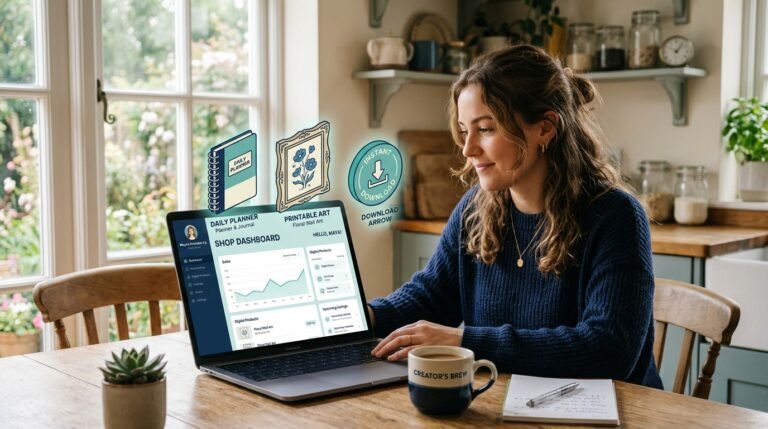
Imagine Maya, a 26-year-old in Austin. She starts with direct links because it’s free and fast. She learns the platform, sees what converts, and earns her first $50. Three months in, she spins up a simple blog and routes her pins through it. Her conversions climb because now she’s building trust before asking for the sale, and she’s collecting emails she owns forever.
That’s the smart arc: start direct to learn, graduate to a bridge page to scale. You’re not choosing one for life. You’re choosing where to begin.
The 2026 Rules You Can’t Ignore
Here’s where people quietly nuke their own accounts. Pinterest affiliate marketing works beautifully, but only if you play by the rules. Break them and your reach doesn’t just dip, it can vanish overnight.
1. Disclose every affiliate link
This isn’t optional and it isn’t just a Pinterest thing. In the US, the Federal Trade Commission (FTC) requires you to clearly disclose paid or affiliate relationships. Add #ad or #affiliate to your pin description. Studies consistently show honest labeling doesn’t hurt your click-through rate, and it keeps you out of legal trouble.
2. Never cloak or shorten your links
No Bitly. No TinyURL. No sneaky redirects. Pinterest treats hidden links as spam and will flag or block them. Paste the full affiliate URL. If you want your own click tracking, add UTM parameters to the end instead of hiding the destination.
3. Use a free business account
Any commercial activity, including affiliate links, is meant for a Pinterest business account. It’s free, and it unlocks Pinterest Analytics and Pinterest Trends, which you’ll actually need.
4. Read your affiliate program’s rules too
Pinterest allowing links doesn’t mean your program does. Rules vary. Amazon Associates, for example, permits linking to products but has its own strict disclosure and usage terms. Some programs ban Pinterest entirely. Getting kicked out for a rule you never read is the most preventable failure in this game.
5. Post fresh, original content
The old growth hacks are dead. Joining fifty group boards and re-pinning the same image over and over doesn’t work anymore. Pinterest now rewards fresh, original pins and consistent posting. Treat every pin as new content, not a copy-paste.
The Best Niches for Pinterest Affiliate Marketing
Not every niche prints money on Pinterest. The platform skews toward visual, aspirational, and “help me improve my life” topics. Its audience is largely female and increasingly Gen Z, with the US as its single biggest market.
Lean into what people actively plan and buy for:
- Home & organization — decor, storage, cleaning products, kitchen gadgets.
- Personal finance & side hustles — budgeting tools, apps, courses, brokerage sign-up bonuses.
- Fashion & beauty — capsule wardrobes, skincare, seasonal outfits.
- Health & wellness — fitness gear, meal-prep tools, supplements (disclose carefully).
- Weddings & events — high spend, high intent, very Pinterest-native.
- Travel — gear, booking tools, packing lists.
- Digital products & software — planners, templates, design tools with recurring commissions.
A quick word to fellow US personal-finance nerds: yes, you can absolutely run money content here. Pins on budgeting, building an emergency fund, or opening a Roth IRA perform well because they’re evergreen and searched constantly. Just keep US-specific facts (like IRS contribution limits or FDIC coverage) clearly labeled as US, since Pinterest’s audience is global.
Where to find affiliate programs
Start with the big networks and platforms, then niche down:
- Amazon Associates — massive product range, lower commissions, easy approval.
- ShareASale, Impact, CJ Affiliate, Awin — thousands of brands, often higher payouts.
- Direct brand programs — many companies run their own; higher commissions, more control.
- Software & SaaS programs — recurring monthly commissions, the holy grail for stable income.
Picture Jordan, a 31-year-old in Denver who loves camping. He joins a couple of outdoor-gear programs plus Amazon, pins seasonal packing guides, and layers in a software program for a trip-planning app that pays him every month a customer stays subscribed. That recurring slice is what turns “nice pocket money” into “this actually matters.”
How to Set Up Your Pinterest for Affiliate Income
Let’s get tactical. Here’s the foundation, in order.
- Switch to a free business account. Settings take two minutes and you unlock analytics.
- Optimize your profile like a search result. Pinterest is keyword-driven. Put your niche keywords in your display name and bio. “Sam | Budgeting & Money Tips” beats “Sam’s Corner” every time.
- Create 5-8 boards around your niche. Give them keyword-rich titles and descriptions. Think of each board as a mini category page.
- Enable Rich Pins if you have a site. They pull metadata from your page and boost credibility and click-through.
- Pick your first 5 keywords. Use Pinterest search’s autocomplete and the Trends tool to see what real people type. Those phrases become your content plan.
Notice what’s not here: buying followers, chasing viral hacks, or posting fifty pins on day one. The foundation is boring on purpose. Boring is what compounds.
- 8 Best Websites to Sell PDF Templates & Planners in 2026 Ready to sell digital planners online but not sure where? We compare Etsy, Gumroad, Payhip, Sellfy,…
- How to Make Money While You Sleep With AI (No Hype) The truth about using AI to make money while you sleep: which tools actually work, how…
- How to Make Money Creating Notion Templates in 2026 A no-fluff guide to making money creating Notion templates in 2026 — how to pick a…
- How to Start a Blog and Make Money in 6 Months (The Honest Plan) Dreaming of a blog that actually pays? This is the honest 6-month roadmap—from picking a profitable…
How to Create Pins People Actually Click
Your pin has one job: earn the click. Pinterest’s algorithm reads your images and text to decide who sees them, so both matter.
The pins that win tend to teach, explain, or solve something. “7 Genius Ways to Organize a Tiny Kitchen” beats a bare product photo, because it promises a payoff.
A simple checklist for pins that convert:
- Go vertical. A 2:3 ratio (like 1000×1500 px) takes up more screen and gets more attention.
- Put keywords in the title and description. A pin with no target phrase rarely surfaces in search.
- Add a clear text overlay. People scroll fast—tell them the benefit in a glance.
- Use a strong, specific call to action. “See the full list” or “Grab the tool” beats silence.
- Make multiple versions per link. Pinterest loves fresh content. One product, five different pin designs, five chances to rank.
- Test video pins. Video is Pinterest’s fastest-growing format right now—even a simple animated pin can outperform a static one.
Free tools like Canva make this genuinely doable in an afternoon. You don’t need to be a designer. You need to be consistent.
What You Can Realistically Earn
Time for the honest part, because someone should say it.
Pinterest affiliate marketing is not a lottery ticket. In your first month or two, you might earn $0 to $50 while you learn what your audience clicks. That’s normal. Anyone promising you $10,000 in week one is selling a dream, not a method.
But here’s the encouraging truth: because pins keep working for months, your effort stacks. The pin you make today can still earn next spring. That’s the opposite of trading hours for dollars.
A rough, realistic arc for someone consistent:
| Stage | Timeframe | Typical range | What’s happening |
|---|---|---|---|
| Learning | Months 1-3 | $0-$100/mo | Testing niches, pins, and keywords |
| Traction | Months 4-8 | $100-$1,000/mo | A few pins take off, patterns emerge |
| Scaling | Months 9-18 | $1,000-$5,000/mo | Bridge pages, email list, recurring programs |
These are ranges, not promises. Some people move faster, many move slower, and plenty quit at month two right before it clicks. The single biggest predictor of earning isn’t talent. It’s whether you’re still posting in month six.
One US tax note: affiliate income is real income. In the States, you’ll likely get a 1099 and owe taxes on it, so set aside a slice from the start. Future-you will be grateful.
Common Mistakes That Kill Pinterest Affiliate Accounts
Most failure here isn’t dramatic. It’s a slow bleed from avoidable errors. Watch for these:
- Skipping disclosure. No #ad or #affiliate is an FTC and Pinterest violation. Not worth it.
- Cloaking links. Shorteners and redirects get you flagged as spam. Paste full URLs.
- Posting only affiliate pins. An account that’s 100% promotion gets throttled. Aim for roughly 80% genuinely helpful content, 20% affiliate.
- Ignoring keywords. A gorgeous pin nobody can find earns nothing. Search relevance is oxygen here.
- One pin per product. You’re leaving traffic on the table. Make several fresh designs.
- Relying only on Pinterest. Algorithms change. Build an email list so you own your audience.
- Promoting junk. One low-quality recommendation can torch the trust you spent months building.
Think of Taylor, who blew up a promising account by dumping raw affiliate links with no value and no disclosure. Reach cratered, links got blocked, and months of work evaporated. Not because Pinterest is hard, but because the shortcuts weren’t shortcuts.
Your 7-Day Pinterest Affiliate Action Plan
Enough theory. Here’s exactly what to do this week to go from reading to earning.
- Day 1 — Pick your niche. Choose one topic you’d happily pin about for a year. One niche, not five.
- Day 2 — Set up your business account. Optimize your name and bio with keywords. Create 5 keyword-rich boards.
- Day 3 — Join 2-3 affiliate programs. Read their Pinterest rules. Start with Amazon Associates plus one niche or software program.
- Day 4 — Find your first 5 keywords. Use Pinterest search autocomplete and Trends. Write them down.
- Day 5 — Design your first 3-5 pins in Canva. Vertical, clear text overlay, keyword titles, honest disclosure.
- Day 6 — Publish and disclose. Add your full affiliate link (or bridge-page link), write keyword-rich descriptions, tag #affiliate.
- Day 7 — Plan your rhythm. Commit to a repeatable schedule (even 1-2 fresh pins a day) and, optionally, sketch out a simple blog or landing page to route traffic through next.
Do that, then repeat it for ninety days before you judge the results. Consistency is the whole cheat code.
Frequently Asked Questions
Is Pinterest affiliate marketing legit and still worth it in 2026?
Yes. With more than half a billion monthly active users and about 85% of weekly users buying from pins, Pinterest remains one of the strongest platforms for affiliate income. Its search-driven feed keeps well-made pins earning for months, which is rare among social platforms.
Can I do Pinterest affiliate marketing without a blog or website?
You can. As of 2026, Pinterest allows direct affiliate links in organic pins, so a website isn’t required to start. That said, routing traffic through a simple bridge page usually converts better, lets you build an email list, and keeps you compliant with programs that ban direct linking.
How long before I make my first commission?
For most consistent beginners, meaningful money starts around months two to four, not week one. Early on you’re testing niches, pins, and keywords. Because pins compound over time, your effort stacks—so the key is to keep publishing while you learn.
Do I really have to disclose affiliate links on Pinterest?
Absolutely. US FTC rules and Pinterest policy both require clear disclosure, typically #ad or #affiliate in the pin description. Honest labeling doesn’t hurt clicks, and skipping it risks account penalties and legal liability. Never cloak or shorten your links either.
Which affiliate programs work best on Pinterest?
Beginners often start with Amazon Associates for its huge product range, then add higher-paying networks like ShareASale, Impact, or CJ Affiliate, plus direct brand and software programs. Recurring-commission software programs are especially powerful for steady, long-term income.
How many pins should I post per day?
There’s no official rule, but consistency beats bursts. Even 1-3 fresh, original pins a day builds a library that keeps surfacing in search. Quality and keywords matter more than sheer volume—one well-optimized pin can outwork twenty lazy ones.
Your Move Starts Today
Here’s the truth nobody frames plainly enough: the people earning from Pinterest aren’t smarter than you. They just started, disclosed honestly, posted consistently, and refused to quit at month two.
Pinterest affiliate marketing rewards patience and punishes shortcuts. That’s actually good news, because patience is a decision, not a talent. You can choose it starting right now.
Pick your niche. Set up your account. Publish your first pin this week. Ninety days from now, you’ll either have a growing income stream or a great story about the week you finally started.
Ready to build the rest of the machine? Explore our guides on the best affiliate programs for beginners, learn how to start a simple blog that earns, and see more passive income ideas that actually work. Your future self is already pinning.