Written and edited by Chandan Bhattacharjee
Editor, IndiFinance | MBA, Economics (Hons.) | Indian | Writes & Teaches Finance, Marketing, Business, Technology & AI
Independent editorial. No paid placements.
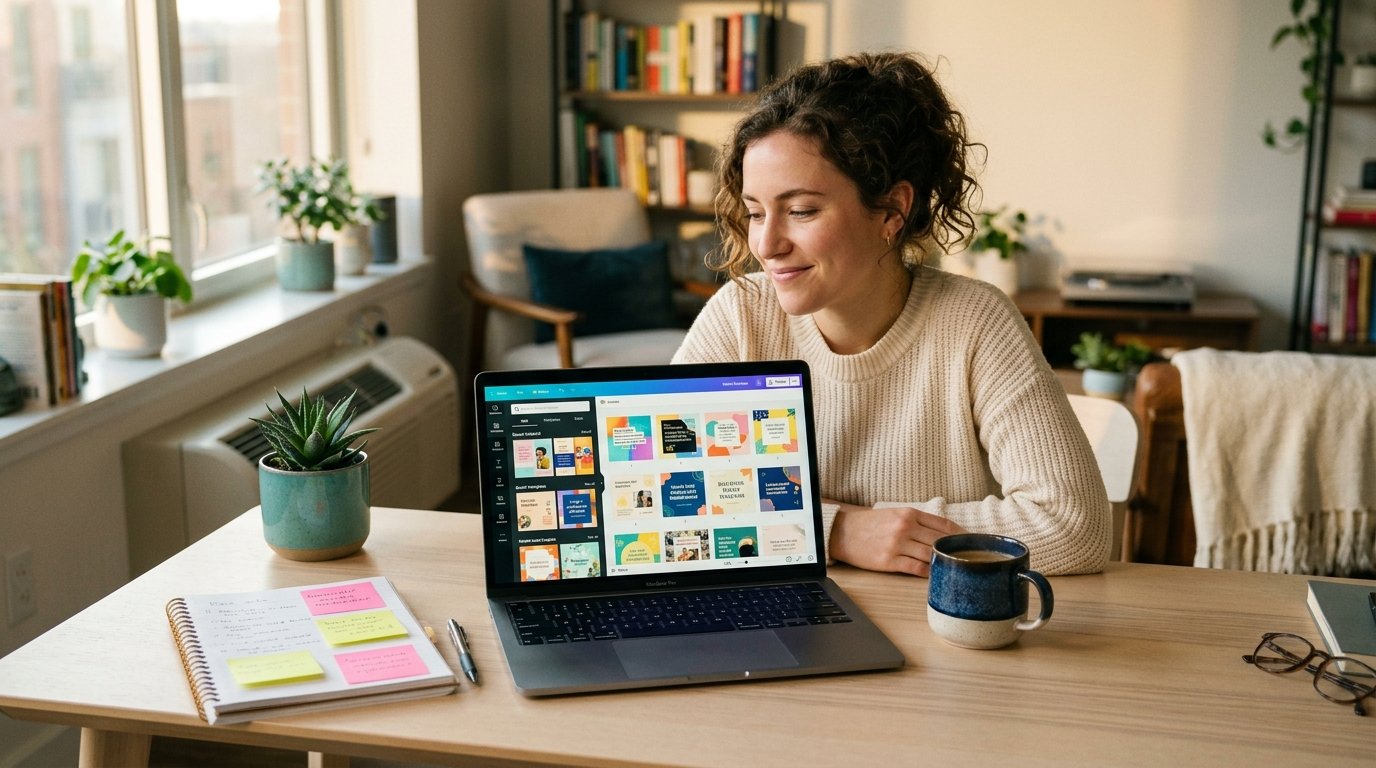
You open Canva to whip up a quick birthday invite. Two hours later, you’ve made three designs you actually love, and a tiny voice whispers: wait, could people pay me for this?
Yes. They could.
Here’s what nobody tells you: you can make money with Canva without being a trained designer, owning expensive software, or having a single art class on your resume.
Millions of small business owners, creators, and busy professionals need fresh graphics every single week. They don’t have time to learn design. They just want it done. That gap, between the people who need designs and the people willing to make them, is exactly where your money lives.
So… Can You Really Make Money With Canva?
Short answer: yes, and it’s more normal than you think. Plenty of people earning a few hundred to a few thousand dollars a month online started with zero design background and a free Canva account.
But let’s be honest, because pretending this is magic helps nobody. This is not a get-rich-overnight button. It’s a real skill plus a real market. The skill (dragging, dropping, picking good fonts) is easy. The hustle (picking a niche, listing, marketing, getting your first sale) is where most people quit.
If you can follow a recipe and you have a little patience, you can do this. The tool was literally built so non-designers could make professional-looking work in minutes.
Why Canva Is a Legit Side Hustle in 2026
Canva isn’t some tiny app. It has grown into one of the most-used design platforms on the planet, with well over 190 million people opening it every month. That’s a giant pool of people who need designs but don’t want to make them.
On the buyer side, marketplaces like Etsy host tens of millions of active shoppers, and the digital-products category there has grown into a market worth more than a billion dollars a year. Translation: people are already spending money on exactly the kind of thing you can make.
The best part? Your startup cost is almost nothing.
- Canva Free is genuinely usable, and you can start selling on it. You do not need to pay to begin.
- Canva Pro runs around $15/month (about $120/year) in the US, though Canva adjusts pricing often, so check the current rate. It mainly buys you premium assets, the background remover, brand kits, and AI tools that save time once you’re scaling.
- No inventory. No shipping. No warehouse. Most of this is digital, which means high margins and work you do once and sell many times.
Compare that to most side hustles that need upfront cash or a garage full of stock, and Canva starts to look pretty friendly.
9 Ways to Make Money With Canva (Even as a Total Beginner)
You don’t need all nine. Pick one that fits your time and interests, get good at it, then stack a second later. Here’s the menu.
1. Sell Canva templates on Etsy
This is the beginner favorite, and for good reason. You design an editable template once (say, an Instagram post pack or a resume), then sell access to it again and again. Buyers get a link that lets them copy and edit your design in their own Canva account.
The trap in 2026 is going broad. A generic Instagram template pack drowns in competition. A pack built for real estate agents, therapists, or med spas stands out and sells. Specific beats general every time.
Imagine Maya, a 31-year-old preschool teacher in Atlanta. She built ten resume-and-cover-letter templates aimed at new nurses, listed them at $9 each, and now earns a steady few hundred dollars a month during her kids’ nap windows.
2. Make social media graphics for local businesses
Your dentist, your gym, your favorite taco spot, they all need posts and have no idea how to make them look good. Offer a monthly package: twelve to twenty branded graphics, done for them.
This is a fantastic first paid gig because it’s recurring income and you only need one or two clients to feel real money.
3. Design Pinterest pins and blog graphics
Bloggers and content creators burn through pins constantly and gladly outsource them. Pins are simple, fast to make in batches, and easy to sell in bundles of 10, 25, or 50.
4. Sell printables and digital products
Budget trackers, meal planners, habit trackers, wedding checklists, chore charts, the list is endless. People buy these every single day. A simple printable you make in an afternoon can sell for years with zero extra work.
5. Create print-on-demand products
Make a design in Canva, upload it to a print-on-demand service like Printify, Printful, or Gelato, and they print and ship mugs, t-shirts, posters, and tote bags whenever someone orders. You never touch inventory. You just design and collect the profit.
6. Build a faceless brand or sell done-for-you content
Plenty of creators run quote pages, motivation accounts, or carousel-heavy niche pages without ever showing their face, all designed in Canva. You can grow one yourself or sell ready-made content packs to other creators who are short on time.
- 8 Best Websites to Sell PDF Templates & Planners in 2026 Ready to sell digital planners online but not sure where? We compare Etsy, Gumroad, Payhip, Sellfy,…
- How to Make Money With Pinterest Affiliate Marketing in 2026 A warm, no-fluff 2026 guide to Pinterest affiliate marketing—how it works, the rules that keep your…
- How to Make Money While You Sleep With AI (No Hype) The truth about using AI to make money while you sleep: which tools actually work, how…
- How to Make Money Creating Notion Templates in 2026 A no-fluff guide to making money creating Notion templates in 2026 — how to pick a…
7. Offer presentation and pitch-deck design
Founders, coaches, and consultants need slides that don’t look like a 2009 PowerPoint. Clean, modern decks are high-value work, and a single deck can earn you $150 to $500 because the client has real money on the line.
8. Design YouTube thumbnails and channel art
Thumbnails make or break a video, and creators know it. A good thumbnail designer can charge per thumbnail or sell monthly retainers to channels that post weekly. Steady, repeatable, and always in demand.
9. Stack affiliate and referral income on top
Once you’re teaching or sharing your process, you can earn referral income from tools you genuinely use (Canva and print-on-demand platforms run affiliate programs). It’s not a standalone business, but it’s a nice bonus layered on top of everything above.
What to Charge: A Quick Pricing Cheat Sheet
One of the biggest reasons beginners quit is they undercharge, burn out, and decide it doesn’t work. Don’t do that. Here are realistic US starting ranges to anchor you.
| What you offer | Typical US price | Effort |
|---|---|---|
| Single Canva template (Etsy) | $5 – $15 | Make once, sell forever |
| Template bundle / kit | $20 – $45 | Make once, higher value |
| Monthly social media graphics | $200 – $600/mo | Recurring per client |
| Pinterest pin pack (25) | $40 – $90 | Fast batch work |
| Pitch deck / presentation | $150 – $500 | Higher skill, higher pay |
| YouTube thumbnails | $10 – $40 each | Quick, repeatable |
Start near the lower end to land your first few reviews, then raise prices the moment demand shows up. Confidence comes after the first sale, not before it.
Common Mistakes to Avoid
Save yourself months of frustration by sidestepping these.
- Reselling Canva’s own templates as-is. This is the big legal one. You can sell original designs you create in Canva, but you cannot just grab Canva’s pre-made template, change two words, and resell it. Your design has to be your own composition. Always follow Canva’s content license.
- Going too broad. Generic flooded niches like plain weekly planners are brutal. Niche down until you can picture your exact buyer walking into a coffee shop.
- Undercharging out of fear. Cheap doesn’t equal sales. It equals exhaustion. Price for the value you deliver, not for your insecurity.
- Launching with one listing. One product rarely gains traction. Most Etsy sellers who win launch with 10 to 20 listings so the algorithm has something to work with.
- Waiting until it’s perfect. Done and listed beats perfect and hidden. You’ll improve faster from real feedback than from another week of tweaking fonts.
- Forgetting it’s income. Once the money flows, remember this is usually 1099 territory in the US. Track your earnings and set a little aside. Future you will be grateful.
Your 7-Day Canva Money Plan
You don’t need a year. You need a focused week. Here’s a plan you can actually finish.
- Day 1 – Pick one income path. Choose a single method from the nine above. Just one. The person who chases all nine earns from none.
- Day 2 – Choose a tight niche. Not Instagram templates. Instagram templates for dog groomers. Validate it by searching Etsy or asking in a relevant Facebook group.
- Day 3 – Set up your free Canva account and create your first design. Keep it simple and easy for buyers to edit, two or three fonts max.
- Day 4 – Build a small batch. Use Canva’s resize and AI tools to spin one design into five to ten variations or listings.
- Day 5 – Pick your storefront. Open a free Etsy or Gumroad shop, or message three local businesses with a sample. Pick the path that matches your method.
- Day 6 – List everything and write clear titles. Use the exact words your buyer would type into a search bar. Add clean preview images.
- Day 7 – Tell the world. Post your work on Pinterest, Reddit, or your community, and message anyone who might need it. Then start designing your next batch while you wait for that first sale.
Your first dollar is the hardest. Once it lands, the whole thing stops feeling like a fantasy and starts feeling like a business.
Frequently Asked Questions
Do I need Canva Pro to make money with Canva?
No. You can start and even sell on the free plan. Canva Pro (around $15/month in the US) mainly saves time with premium assets, the background remover, and AI tools, which become worth it once you’re scaling, not on day one.
Is it legal to sell designs I make in Canva?
Yes, as long as they’re your own original compositions and you follow Canva’s content license. What you can’t do is resell Canva’s pre-made templates or standalone elements as your own product. Create something original and you’re fine.
How much can a beginner realistically earn?
Expect a slow start, then momentum. Many beginners make their first sale within two to four weeks and grow toward a few hundred dollars a month within their first few months of consistent effort. Some scale much higher. Your niche, listing quality, and consistency matter more than raw design talent.
What should I make first if I’m brand new?
Templates and printables are the easiest entry points because you create them once and sell them repeatedly. Pick a specific buyer with a specific problem, like a resume for new nurses or a budget tracker for college students, and start there.
How long until I see results?
If you follow a focused plan and list 10 or more products, first sales often arrive within one to four weeks. The people who fail usually quit before week three or never list at all. Consistency is the real secret.
The Bottom Line
You don’t need a fancy degree, a design background, or thousands in startup cash. You need one good idea, a tight niche, and the guts to hit publish before you feel ready.
The truth about how to make money with Canva is almost annoyingly simple: the people who win are the ones who actually start, list their work, and keep going while everyone else is still watching tutorials. Talent is optional. Showing up is not.
So pick your path, open Canva, and build something this week. Treat those first earnings like a foundation, drop a slice into an emergency fund and let the rest fund your next move.
Ready to keep building? Explore our guides on the best side hustles to start this year and how to turn extra income into real wealth with beginner-friendly investing. Your future self is already cheering.