
Written and edited by Chandan Bhattacharjee
Editor, IndiFinance | MBA, Economics (Hons.) | Indian | Writes & Teaches Finance, Marketing, Business, Technology & AI
Independent editorial. No paid placements.
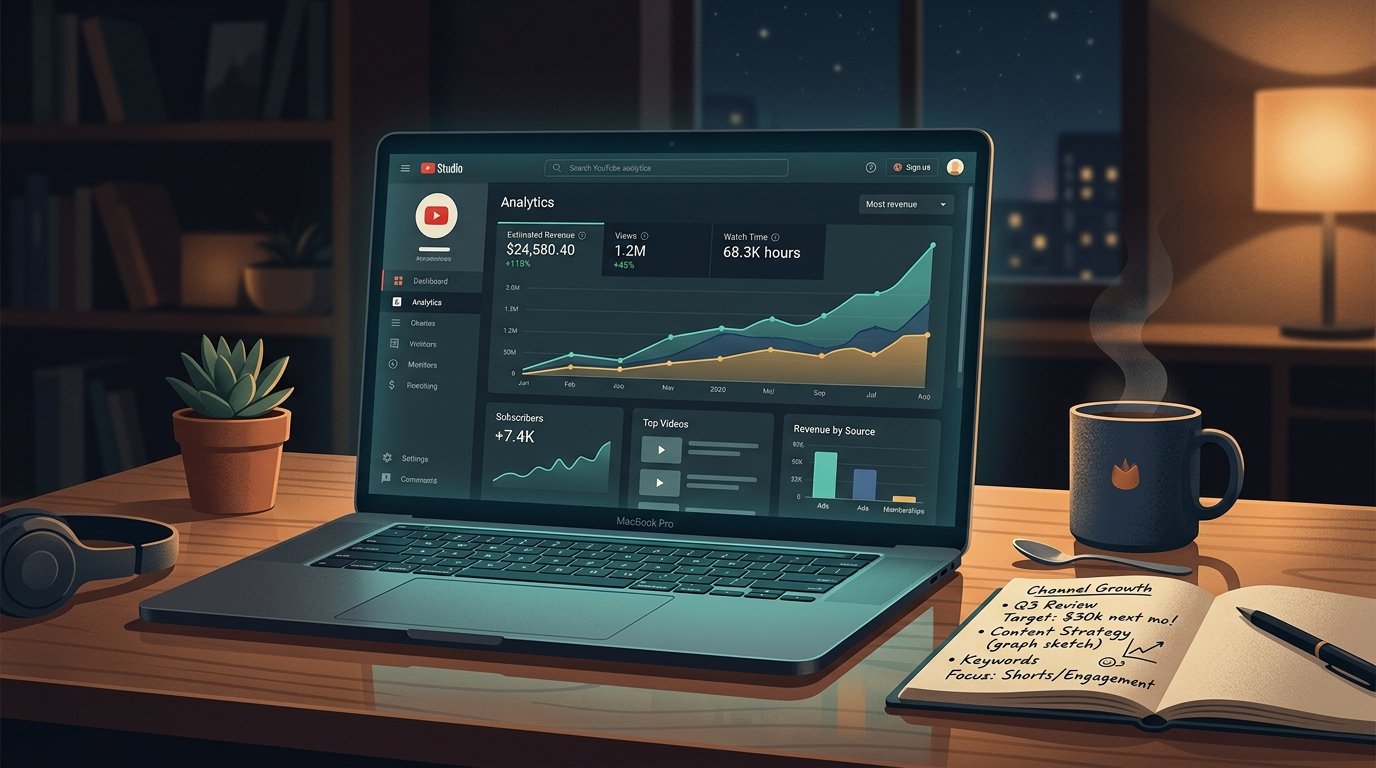
Someone in Denver is pulling in $8,000 a month from YouTube. You’ve never heard their name. You’ve never seen their face. You’ve probably scrolled past their channel a dozen times without knowing it exists.
But their videos rack up millions of views — and their income grows every single month, quietly, on autopilot.
Welcome to the world of the faceless YouTube channel. And in 2026, the barrier to entry has never been lower.
If you’ve always wanted to build a YouTube income stream but stopped yourself because you hate being on camera — no ring light, no studio setup, no confidence in how you look or sound — you’re in the right place. Some of YouTube’s highest-earning channels have never shown a single frame of a human face. No awkward intros. No on-camera anxiety. Just smart content, the right niche, and an AI-powered workflow that does most of the heavy lifting. Here’s how to build one from scratch.
What Is a Faceless YouTube Channel (And Why It Actually Works)
A faceless YouTube channel produces videos where the creator never appears on camera. The content is carried entirely by voiceover narration, screen recordings, stock footage, animations, or AI-generated visuals — and viewers don’t need to see a face to get serious value from it.
Think about the last finance explainer you watched that walked you through how index funds work. Or a documentary-style deep dive into a historical event. Or a true crime breakdown with atmospheric visuals and a gripping narrator. Chances are, none of those featured a talking head. Just a compelling voice, purposeful visuals, and information someone actually wanted.
That’s the model. And it works because YouTube viewers don’t ultimately care about faces — they care about answers. They want to learn something, feel something, or be entertained. If your content delivers that, the algorithm rewards you regardless of whether there’s a human on screen.
What makes the faceless format especially powerful right now:
- Scalability. You can run multiple channels simultaneously without the burnout of on-camera performance. The content is driven by systems, not personality — which means it scales.
- Complete privacy. Your employer, your neighbors, your family — none of them need to know you’re building a YouTube income stream. You maintain full anonymity.
- AI has collapsed the production timeline. Tools that didn’t exist two years ago can now handle scripting, voiceover, video assembly, and thumbnail design. A video that used to take 8 hours to produce can now be done in under 90 minutes.
- Evergreen income potential. A well-made faceless video about Roth IRA contribution limits or how to improve your FICO score can pull views — and ad revenue — for two or three years after you upload it. You work once; the video keeps earning.
- Lower production costs. No camera gear, no lighting equipment, no rented studio. A laptop and a few software subscriptions is your entire setup.
The catch? Faceless does not mean effortless. The channels making real money have a deliberate system: a proven niche, a consistent format, and original thinking baked into every video. More on that shortly.
Pick Your Niche Like Your Income Depends on It — Because It Does
This is the single decision that determines almost everything downstream. Not your editing software. Not how many social followers you have. Not your thumbnail design skills. Your niche is your foundation, and the wrong one can have you grinding for a year with almost nothing to show for it.
The best faceless niches check three boxes:
- High advertiser demand. Advertisers bid aggressively for audiences who are researching money, health, software, or legal decisions — because those viewers are close to a purchasing decision worth hundreds or thousands of dollars. The more valuable your viewer’s next action is to an advertiser, the more they pay to reach that viewer on your channel.
- Face-optional format. Finance explainers, true crime documentaries, tech tutorials, and narration-driven educational content don’t require a presenter on screen. Reaction content, personal vlogs, and live commentary typically do. Build in the former category.
- Evergreen or consistently trending topics. You want videos that keep accumulating views 18 months from now, not just for 48 hours after upload. A video titled “How to Open a Roth IRA” will get searched today, tomorrow, and five years from now. “My reaction to this week’s meme” will not.
Imagine Alex, a 28-year-old software engineer in Austin earning $95,000 a year who wants a side income stream without quitting his job. He starts a faceless channel explaining AI tools to non-technical professionals — clear, jargon-free explainers covering things like “Best AI Tools for Small Business Owners” or “How to Use AI to Automate Your Workday.” His content hits a high-advertiser-demand niche, requires zero on-camera presence, and stays relevant for months. Within six months, Alex hits the YouTube Partner Program threshold and starts earning from ads — plus affiliate commissions on the tools he reviews.
That’s the niche-to-income pipeline in action.
The Highest-Paying Faceless Channel Niches in 2026
Not all YouTube niches pay equally. The gap is staggering. A US-focused finance channel can earn $10–$25 per 1,000 monetized views (RPM) from the same traffic that a gaming channel earns $2–$5 on. Here’s the breakdown for the top faceless-friendly niches, based on 2026 US creator earnings benchmarks:
| Niche | Avg. US RPM Range | Faceless-Friendly? | Best Format |
|---|---|---|---|
| Personal Finance & Investing | $10–$25 | Yes | Explainers, tutorials, case studies |
| Make Money Online / Business | $8–$20 | Yes | How-to guides, income breakdowns |
| Tech & AI Tools | $8–$18 | Yes | Screen recordings, tool reviews |
| True Crime / Documentary | $8–$12 | Yes | Narration over footage or images |
| Education / Career | $6–$14 | Yes | Animated explainers, tutorials |
| Health & Wellness | $6–$12 | Yes | Narrated guides, routines |
| ASMR / Sleep / Meditation | $8–$11 | Yes | Ambient audio, visual streams |
| Gaming | $2–$5 | Partial | Commentary, compilations |
Personal finance and investing consistently ranks as the single highest-paying niche on YouTube. Financial services advertisers — banks, brokerages like Fidelity and Schwab, fintech apps, insurance companies — spend aggressively because a single converted customer can be worth tens of thousands of dollars over their lifetime. A viewer watching a video about how to open their first brokerage account is making a financial decision right now. Advertisers pay premium rates to be in the room when that happens.
If you’re a US creator targeting a US audience, a finance channel covering index fund investing, retirement account strategies, or credit score improvement can realistically earn $15–$40 RPM once your audience skews toward American viewers in the 25–45 age range.
Pro tip: Narrow your niche within the category. “Personal finance” is a continent. “Personal finance for freelancers filing 1099s” is a town — and it’s a town where you can become the go-to channel quickly. Specificity beats breadth every time on YouTube in 2026.
Your AI Production Toolkit: Professional Videos in Under 2 Hours
Here’s what used to stop people from building faceless channels: the production grind. Writing a script, sourcing or recording a voiceover, finding footage, editing everything together, designing a thumbnail, optimizing titles and descriptions. For a 10-minute video, that was a full day of work — sometimes more.
AI tools have collapsed that timeline to 60–90 minutes. Here’s the production stack serious faceless creators are running in 2026:
Scripting: ChatGPT or Claude
Your script is the spine of the video. Large language models handle ideation, research structuring, and first-draft writing fast. Give the AI a clear topic and specific angle, then edit the output aggressively — adding your own perspective, examples, and voice. AI scripts that get published without human review and editing sound generic, and YouTube’s content quality filters are sophisticated enough to notice the difference.
Voiceover: ElevenLabs
ElevenLabs produces some of the most realistic AI voices available anywhere in 2026. You choose from hundreds of voices, adjust pacing and emotional tone, and can even clone a custom voice from a short audio sample — creating a consistent, recognizable audio identity across your channel without ever recording yourself. Natural-sounding narration is non-negotiable: robotic or monotone AI voices cause viewers to drop off in the first two minutes, and YouTube’s algorithm punishes low retention instantly.
Video Creation: InVideo AI, Pictory, or Fliki
These tools take your script and voiceover and assemble a video automatically — pulling relevant stock footage from licensed libraries like Getty and Storyblocks, timing cuts to your narration, overlaying captions, and adding background music. InVideo AI and Pictory are particularly strong for finance and education content. Fliki is excellent if you’re planning multilingual content, with over 2,000 voices across 80+ languages.
Editing and Shorts: CapCut
CapCut’s AI-powered editing templates are ideal for trimming long-form videos into YouTube Shorts or cross-platform clips for Instagram Reels and TikTok. Shorts don’t generate major ad revenue on their own — more on that below — but they’re a powerful subscriber growth engine, feeding viewers into your long-form content where the real money is made.
SEO and Growth: vidIQ or TubeBuddy
These tools help you find keywords your audience is already actively searching, analyze what’s working on competitor channels, A/B test thumbnails, and track your channel’s performance over time. Good YouTube SEO on a faceless channel is the difference between a video that peaks at 200 views and one that ranks in search and pulls 20,000 views a month on autopilot, three years after upload.
Imagine Taylor, a 32-year-old high school teacher in Chicago who wants a side income without changing careers. She uses Claude to outline scripts on personal finance topics for millennials, ElevenLabs for a consistent warm voiceover, and InVideo AI to assemble the final video. Total production time per video: about 90 minutes. She uploads twice a week. By month five, she has the watch hours and subscribers to apply for YouTube Partner Program monetization — all while teaching full-time.
Step-by-Step: Creating Your First Faceless Video
Here’s the exact production sequence to follow for your first upload. Do this in order and don’t skip steps.
- Choose a specific topic with real search intent. Use vidIQ or TubeBuddy to find a keyword people are already searching in your niche. “How to start a Roth IRA at 25” beats “investing tips” by a mile — specific search queries pull targeted viewers who stay longer and convert better on affiliate links.
- Write — or generate and then heavily edit — a tight script. Structure: hook in the first 15 seconds (a bold claim, surprising stat, or question your viewer is already asking themselves), context or problem statement, 4–6 main points developed with examples, a brief recap, and a clear call to action. Aim for 1,200–1,800 words for a 10-minute video. Edit the AI draft ruthlessly. Add your own research, real numbers, and specific examples that a bot wouldn’t think to include.
- Generate the voiceover with ElevenLabs. Choose a voice with natural pacing and warmth. Export the audio file. Listen back and flag any lines that sound unnatural — regenerate those sections with adjusted phrasing.
- Assemble the video. Load your script and voiceover into InVideo AI, Pictory, or Fliki. Review the auto-selected footage and swap anything that doesn’t visually match your narration. Add captions — research consistently shows captions increase average view duration, which directly impacts how the algorithm distributes your video.
- Design a thumbnail that earns the click. Use Canva’s free tier. Your thumbnail and title are the two most critical factors in whether a viewer clicks on your video in the first place. High click-through rate (CTR) signals quality to the algorithm. Use strong contrast, a clear focal point, readable text at thumbnail size, and an image that creates curiosity without being misleading.
- Optimize every field before uploading. Write an SEO-optimized title that opens with your keyword naturally. Write a 150–200 word description that also opens with the keyword and includes a clear summary of what the video covers. Add 5–8 relevant tags. Insert chapter timestamps — these help with search indexing and make your video easier to navigate, improving retention.
- Publish at the right time and promote actively. For US audiences, Thursday and Friday evenings (7–10 PM Eastern) tend to perform well, but once you have data, let your own analytics guide you. Share new videos in relevant subreddits (r/personalfinance, r/investing, r/financialindependence) with genuine value, not spam. Repurpose 60-second clips to YouTube Shorts, Instagram Reels, and TikTok to extend reach.
How to Hit YouTube Monetization: The Exact Numbers
Here’s the milestone everyone is building toward: acceptance into the YouTube Partner Program (YPP), which unlocks ad revenue sharing. In 2026, there are two tiers with different thresholds.
Tier 1 — Early Access (fan funding, no ad revenue): 500 subscribers, 3 public uploads in the past 90 days, and either 3,000 watch hours in the past 12 months or 3 million valid Shorts views in 90 days. This unlocks Super Thanks, Channel Memberships, and YouTube Shopping — but not AdSense ad revenue.
Tier 2 — Full Monetization (ad revenue unlocked): 1,000 subscribers and either 4,000 valid public watch hours in the past 12 months or 10 million valid Shorts views in the past 90 days. This is the tier you’re building toward. It unlocks pre-roll and mid-roll ads, YouTube Premium revenue sharing, and the full suite of monetization features.
Beyond the subscriber and watch hour counts, you’ll also need: no active Community Guidelines strikes, two-step verification enabled on your Google account, and a linked Google AdSense account set up in advance. YouTube typically reviews applications within about 30 days of submission.
- 8 Best Websites to Sell PDF Templates & Planners in 2026 Ready to sell digital planners online but not sure where? We compare Etsy, Gumroad, Payhip, Sellfy,…
- How to Make Money With Pinterest Affiliate Marketing in 2026 A warm, no-fluff 2026 guide to Pinterest affiliate marketing—how it works, the rules that keep your…
- How to Make Money While You Sleep With AI (No Hype) The truth about using AI to make money while you sleep: which tools actually work, how…
- How to Make Money Creating Notion Templates in 2026 A no-fluff guide to making money creating Notion templates in 2026 — how to pick a…
Realistic timeline for a focused faceless creator posting two videos per week in a searchable niche: 3–6 months to reach Tier 2. Finance and education channels tend to move faster because videos rank in search and accumulate watch hours steadily over time — not just in the 48 hours after upload. A single video that ranks for a strong keyword can deliver hundreds of watch hours per month, month after month.
Note for non-US creators: The YouTube Partner Program is available in 120+ countries, but not universally. Check YouTube’s official supported-country list before building your channel strategy around monetization. Affiliate marketing and digital product sales are available to you regardless of YPP eligibility, which is why stacking revenue streams matters from Day 1.
Revenue Streams Beyond AdSense: Where the Real Money Is
Here’s a mindset shift that separates hobbyist channels from genuine income-generating operations: AdSense is the floor, not the ceiling. The channels earning $10,000–$50,000 per month stack multiple revenue streams on top of ad revenue, and several of them don’t require a large audience to start working.
Affiliate Marketing
This is the most natural fit for faceless channels, especially in finance and tech. You recommend products or services in your video narration and video descriptions, and earn a commission when a viewer purchases through your link. Finance channels can promote brokerage accounts (some pay $50–$200 per referred account opening), budgeting apps, credit card comparison platforms, tax software, and financial planning tools. A single well-researched affiliate link in a high-performing video can generate hundreds of dollars in passive commissions every month — and it scales with every new video you publish.
Sponsorships
Once your channel reaches a few thousand engaged subscribers in a targeted niche, brands will start reaching out — or you can pitch them directly via email. A finance channel with 10,000 subscribers can realistically charge $500–$2,000 for a 60-second mid-roll integration, depending on audience quality and niche. Faceless finance and tech channels often command higher sponsorship rates than entertainment channels with much larger subscriber counts, because the viewer intent and purchasing power are demonstrably stronger.
Digital Products
An eBook, a budget spreadsheet template, a financial planning calculator, a mini-course — these can be sold directly to your audience through platforms like Gumroad or Teachable. If your channel covers budgeting and you create a $19 “Zero-Based Budget Starter Kit,” even 60 sales a month adds $1,140 in revenue that has nothing to do with your subscriber count and doesn’t fluctuate with the algorithm.
YouTube Channel Memberships
Viewers can pay a monthly fee — starting at $0.99, with creators keeping roughly 70% after YouTube’s cut — for exclusive perks: early video access, bonus content, a members-only community space. Even a small, loyal audience generating $500/month in memberships creates a predictable income baseline that isn’t tied to any single video’s performance.
The income flywheel looks like this: AdSense pays your baseline while you grow → affiliate commissions scale with each new video → sponsorships unlock at audience milestones → digital products create revenue that compounds independently of view counts. Jordan, a 35-year-old in Seattle running a faceless personal finance channel with 28,000 subscribers, earns roughly $1,400/month from AdSense, $800/month in affiliate commissions, and $600/month from a $27 budgeting template — totaling close to $2,800/month before landing a single paid sponsorship deal.
YouTube’s 2026 AI Content Rules: What’s Allowed (And What Gets You Demonetized)
This is where many new faceless creators make a costly mistake. YouTube is explicitly supportive of AI-assisted content creation — but it has cracked down hard on a specific type: mass-produced, low-effort AI content with no original thought, research, or creative direction behind it.
In early 2026, YouTube suspended monetization on thousands of faceless channels that were uploading AI-generated videos at volume with no human oversight — videos that could have been produced by a bot, because effectively they were. YouTube’s AI detection systems can now identify the patterns in templated, repetitive, zero-effort content.
Here’s what the rules actually mean for you in practice:
- AI narration (ElevenLabs, synthetic voices, voice cloning): Allowed.
- AI-assisted video editing and assembly (InVideo AI, Pictory, Fliki, CapCut): Allowed.
- AI-generated first-draft scripts that you edit, research, and add original perspective to: Allowed.
- Mass-produced videos with no original thought, research, unique angle, or human creative direction: Not allowed. If a viewer couldn’t distinguish your content from something a bot generated without any oversight, you’re in the demonetization danger zone.
The practical rule: use AI as your production engine, not your creative replacement. Your research, your editorial perspective, your unique angle on the topic — those need to be genuinely yours. Add examples, real data, and specific insights that a templated AI output wouldn’t generate. That’s what separates channels that stay monetized from channels that lose it and never understand why.
Things Nobody Tells You About Running a Faceless Channel
The first 90 days feel like shouting into a void
Almost every successful faceless creator shares the same early story: brutal. Views in single digits. Zero comments. Zero revenue. This is completely normal — and it’s the period where most people quit. YouTube’s algorithm takes time to understand your channel, index your content, and distribute it to the right audience. The creators who make real money are the ones who kept publishing during this window anyway. The algorithm rewards consistency over time, not volume in week one.
Shorts alone will not pay your bills
YouTube Shorts RPM is approximately $0.01–$0.06 per 1,000 views in 2026 — compared to $10–$25 for long-form finance content with mid-roll ads. Shorts are a powerful tool for growing subscribers and introducing new viewers to your channel, but they will not replace your salary. Build your revenue foundation on 8–15 minute long-form videos that qualify for mid-roll ads, then use Shorts to funnel traffic into them.
Q4 is the golden quarter — plan around it
YouTube ad rates fluctuate dramatically throughout the year. The fourth quarter (October through December) is when advertisers exhaust their annual budgets. Finance RPM in Q4 can reach $25–$30 per 1,000 views for US-targeted content, versus $8–$12 in January. If you’re serious about maximizing annual revenue, plan your best, most highly produced content for fall publication. The per-view earnings difference is significant.
Narrow down further than feels comfortable
Most new creators pick niches that are too broad to compete in. “Personal finance” is a continent with thousands of established channels. “Roth IRA strategies for self-employed freelancers” is a specific, searchable corner of that continent — and it’s one where a brand-new channel can rank in search within weeks. Narrow niches build authority faster, attract more loyal audiences, and command higher affiliate commissions from niche-specific advertisers.
Your thumbnail matters more than your video
This sounds wrong until you test it. A mediocre video with a compelling thumbnail and title will consistently outperform a brilliant video with a forgettable one. Click-through rate (CTR) is among YouTube’s most important distribution signals — it tells the algorithm whether viewers want to watch your video before they’ve seen a single second of it. Spend as much time on your thumbnail as on your script. Test different thumbnail styles every month. Iterate based on your CTR data in YouTube Studio.
Your 7-Day Faceless Channel Launch Plan
- Day 1 — Lock in your niche and sub-niche. Choose one category from the high-RPM list above and narrow it to a specific audience segment: personal finance for gig economy workers, AI tools for solopreneurs, true crime cases from a specific era or region. Write the positioning down. Commit to it for 90 days minimum — consistency of topic signals authority to the YouTube algorithm.
- Day 2 — Research 20 specific video ideas. Use vidIQ or TubeBuddy’s free tier to identify keywords with real monthly search volume and manageable competition. Record your top 10 ideas in a spreadsheet with working titles, target keywords, and notes on the angle. This becomes your content calendar.
- Day 3 — Set up your channel professionally. Create your YouTube channel with a clear, memorable name, a keyword-informed channel description, and professional channel art designed in Canva. Set up your Google AdSense account now — even before you qualify for monetization — because AdSense verification takes time, and you want it ready the moment you hit the threshold.
- Day 4 — Produce and publish your first video. Follow the step-by-step production workflow above. Don’t aim for perfection on video one. Aim for published. Your first upload teaches you more about your workflow, your niche, and your audience than any guide ever will.
- Day 5 — Set up your affiliate partnerships. Sign up for the Amazon Associates program and the affiliate programs of any specific tools, platforms, or services relevant to your niche. Platforms like Impact, ShareASale, and PartnerStack aggregate affiliate offers across hundreds of companies. Add affiliate links to every video description from day one — even with zero subscribers, someone might find your video via search.
- Day 6 — Build a 30-day content calendar. Map out 8 video topics with working titles, target keywords, and publish dates. Two videos per week is the right cadence for most new faceless channels — enough to build momentum without sacrificing quality or burning out.
- Day 7 — Publish and actively distribute. Share your first video in relevant communities with genuine value: relevant subreddits, Facebook groups in your niche, LinkedIn if you’re in a professional topic area. Repurpose 60-second clips to YouTube Shorts, Instagram Reels, and TikTok. Every early organic view and watch signal helps the algorithm understand your content faster.
Frequently Asked Questions
How much can you realistically earn with a faceless YouTube channel?
It depends heavily on your niche, how many revenue streams you stack, and your audience’s geography. A US-focused finance channel earning $15 RPM with 50,000–100,000 monthly views earns $750–$1,500/month from ads alone. Add affiliate marketing and one sponsorship and that figure can reach $3,000–$5,000/month. Top faceless creators in high-RPM niches targeting US audiences earn $10,000–$50,000+ per month — but that level requires years of consistent effort and a well-optimized multi-stream revenue model to reach.
Does YouTube allow AI-generated content on faceless channels?
Yes. YouTube’s 2026 policies explicitly permit AI-assisted narration, editing, and scriptwriting. What YouTube prohibits is mass-produced content with no original thought, creative direction, or human oversight — content that looks and feels like it was generated by a bot with no human involved. Use AI to produce faster and more efficiently, but make sure your research, angle, and editorial perspective are genuinely yours on every video.
How long does it take to monetize a faceless YouTube channel?
Most creators posting two videos per week in a searchable, specific niche reach the YouTube Partner Program Tier 2 threshold (1,000 subscribers + 4,000 watch hours) within 3–6 months. Finance and education channels often move faster because their videos rank in search and accumulate watch hours steadily over time. Consistency — publishing on schedule even when early results are discouraging — is the single biggest variable in how quickly you get there.
Do you need expensive equipment to start a faceless YouTube channel?
No. A laptop, an internet connection, and $20–$50/month in AI tool subscriptions is a completely realistic starting budget. Canva’s free tier handles thumbnails and channel art. ElevenLabs has a free tier for low-volume voiceover. Most leading faceless video creation tools cost under $25/month for entry-level plans. You don’t need a camera, a microphone, a ring light, or a studio. None of it.
What is the best niche for a faceless channel in 2026?
For pure ad revenue per view, personal finance and investing is the highest-paying niche for US-targeted audiences, with RPMs of $10–$25 and above. For growth speed combined with strong RPM, AI tools and tech explainers are the fastest-expanding category right now. True crime and documentary-style channels deliver exceptional watch time and engagement. The “best” niche is always the intersection of high advertiser demand, a face-optional content format, and a topic you can consistently produce genuinely good content about for 12+ months.
Can you run multiple faceless YouTube channels at the same time?
Yes — and many experienced creators build portfolios of 2–4 channels across complementary niches. This diversifies income and reduces the risk of any single algorithm change hurting your overall revenue. That said, master the production workflow on one channel first. A repeatable, efficient system on Channel 1 is what makes Channel 2 viable. Spreading across multiple channels before you have a working system just means producing mediocre content at higher volume.
Start Quietly. Build Seriously.
The best thing about a faceless YouTube channel is that nobody has to know you’re building it. You can start tonight, on your couch, with nothing but a laptop and a good idea. No camera. No audience. No pressure to perform. Just a niche you understand, an AI toolkit that handles production, and a plan you’ll actually stick to.
The faceless model works because value beats personality at scale. If your content teaches someone how to max out their Roth IRA, how to understand their credit score, or how to stop living paycheck to paycheck — they will watch, subscribe, and share it. The face behind the channel is irrelevant. The value is everything.
Give it 90 days of genuine consistency. Post twice a week. Improve your thumbnail every month. Dig deeper into your niche than any competing channel bothers to. That’s the full playbook. It’s not glamorous. But it works — and it keeps working long after you’ve moved on to your next video.
Ready to build further? Explore our guides on passive income streams that actually work and the best ways to make money online right now — and start building an income that doesn’t require your face, your boss’s permission, or a camera you don’t own.