
Written and edited by Chandan Bhattacharjee
Editor, IndiFinance | MBA, Economics (Hons.) | Indian | Writes & Teaches Finance, Marketing, Business, Technology & AI
Independent editorial. No paid placements.
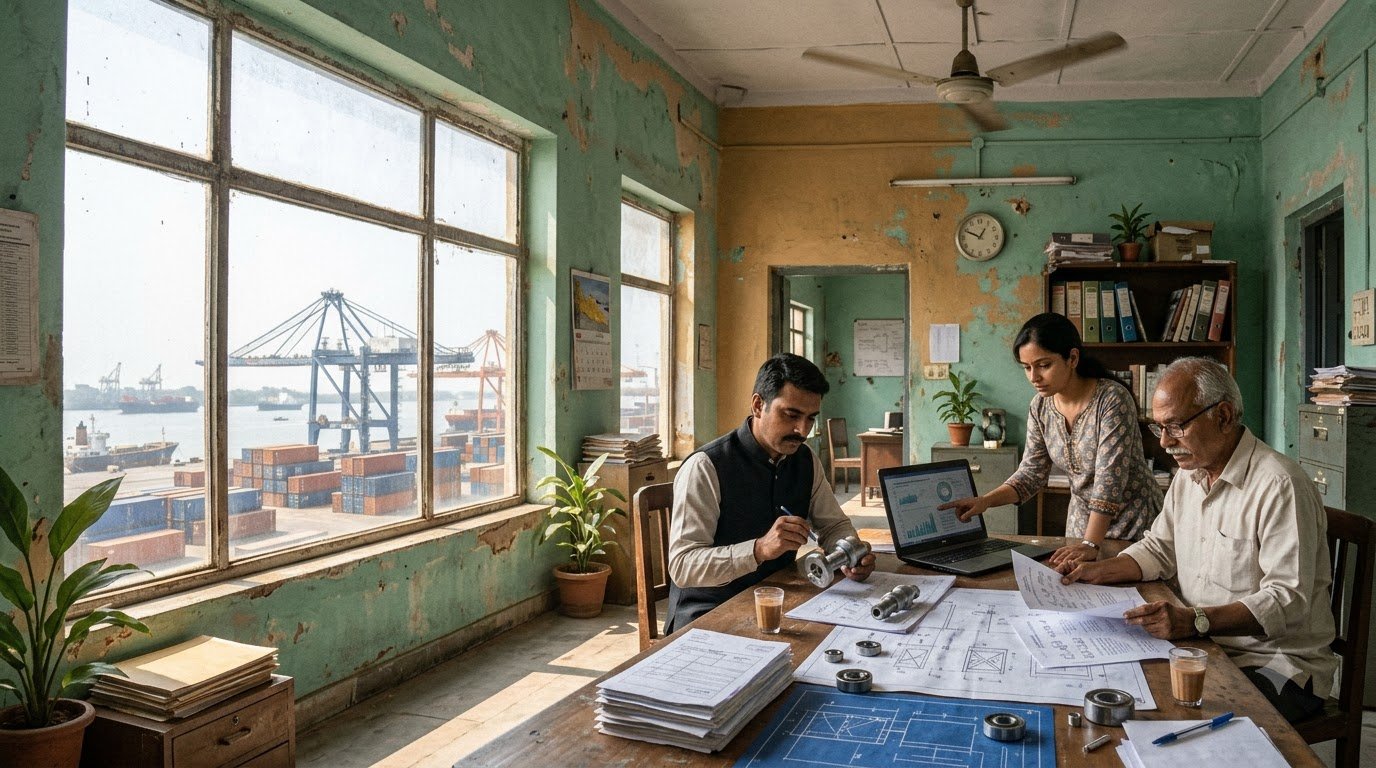
India Brazil trade creates economic opportunities in agriculture, biofuels, oil and gas, pharmaceuticals, digital services, manufacturing and minerals. For you, the practical opening could be an export order, a specialised service or a job supporting businesses in these sectors.
The strongest opportunity depends on what you can already deliver. A software team, a pump manufacturer and a pharmaceutical exporter face very different customers, costs and approval requirements.
Here is where the relationship could create value, how smaller Indian businesses can participate, and why a ₹5 lakh export order can leave much less profit than expected.
Why do India and Brazil make useful economic partners?
The two economies have strengths that can complement each other. Brazil supplies agricultural commodities, energy and mineral resources. India brings capabilities in medicines, software, chemicals, engineering and manufacturing. Both countries also have businesses that need better technology, equipment and distribution.
Existing trade reflects some of this fit. India’s exports to Brazil include pharmaceuticals, agrochemicals, engineering products and processed petroleum products. Brazilian exports to India include crude oil, soybean oil, cotton and iron ore, according to the Indian Embassy’s bilateral overview.
There is continuing policy interest, too. India’s Commerce Ministry update of 31 August 2026 describes work on pharmaceutical access, agricultural trade, MSME cooperation and expanding the India–MERCOSUR Preferential Trade Agreement.
These developments suggest areas to investigate. They do not establish demand for your particular product. A buyer still needs a reason to choose you over an existing supplier.
Where are the India Brazil trade opportunities?
Use this table to identify a starting point. The business ideas below are possible entry routes, not claims that contracts or vacancies are currently available.
| Sector | Possible opportunity | Who could explore it | Main hurdle |
|---|---|---|---|
| Agriculture and food processing | Equipment, storage, testing and processing services | Established equipment suppliers and agritech teams | Product suitability, approvals and servicing |
| Biofuels and renewable energy | Process equipment, automation and technical support | Engineering firms and specialist consultants | Project economics and technology performance |
| Oil and gas | Industrial supplies, maintenance and inspection | Qualified vendors and experienced professionals | Vendor qualification and commodity cycles |
| Pharmaceuticals and healthcare | Medicines, manufacturing partnerships and regulatory support | Compliant manufacturers and healthcare specialists | Registration and local responsibility |
| IT and digital services | Business software, cybersecurity and data services | Software firms and specialist service teams | Localisation, trust and customer support |
| Manufacturing and aerospace | Components, tooling, engineering and maintenance | Manufacturers with documented quality systems | Certification and long qualification periods |
| Minerals and materials | Processing, recycling, equipment and industrial technology | Industrial suppliers and technical specialists | Capital, permissions and technical complexity |
1. Agriculture: look beyond buying and selling crops
Commodity trading is only one part of agricultural business. Processing, storage, machinery, quality testing and reducing wastage can also create value.
India and Brazil signed an agricultural research cooperation agreement between ICAR and Brazil’s Embrapa in July 2025. The official visit outcomes also recorded cooperation in renewable energy and digital transformation.
For an Indian business, a sensible research question might be whether Brazilian processors need a particular sorting machine, pump, sensor or packaging solution. Start with a specific application and compare your equipment with what buyers already use.
Say a manufacturer in Coimbatore makes equipment for Indian food processors. Before approaching Brazil, it should check local operating conditions, technical standards, replacement parts and installation support. A lower purchase price loses its appeal if repairs require weeks of waiting.
Fresh produce and other agricultural goods need separate checks on market access, pest-control requirements, shelf life and inspection. Agricultural cooperation does not mean every food product can move freely.
2. Biofuels: the opportunity includes technology and equipment
Biofuels connect farming, industrial processing and transport. Brazil’s experience makes it a relevant partner for India’s efforts in this area.
The Indian Embassy’s energy overview documents bilateral bioenergy cooperation and Brazil’s participation as a founding member of the Global Biofuels Alliance.
Possible commercial openings include process equipment, plant automation, monitoring systems, maintenance and technical training. Indian firms could also investigate partnerships that adapt Brazilian technology to Indian operating conditions.
For a small engineering business, supplying a well-tested component may be more achievable than developing an entire production plant. You need to know who buys it, what performance they require and who handles failures.
The project still has to make financial sense. Feedstock availability, water use, energy costs and equipment efficiency affect the outcome. A renewable-energy label is useful context; it cannot replace a project-level cost calculation.
3. Oil and gas: smaller suppliers can investigate the supporting work
Energy cooperation already includes Indian commercial participation. The Indian Embassy identifies ONGC Videsh and BPRL among Indian businesses with investments in Brazil’s upstream oil and gas sector.
Most readers will not be funding an offshore project. More accessible areas to investigate include industrial components, inspection, specialised maintenance, engineering documentation and software used by energy businesses.
These are demanding markets. A supplier may need proven quality systems, technical references and the capacity to meet strict delivery requirements. An initial conversation is a long way from becoming an approved vendor.
Commodity cycles also matter. When project spending slows, orders for supporting businesses can slow with it. Before committing machinery or staff, examine customer concentration and whether the same capability can serve other industries.
4. Pharmaceuticals: affordable supply needs regulatory preparation
Pharmaceuticals are an established part of India’s exports to Brazil. Opportunities can include medicines, manufacturing partnerships and services that help companies manage quality and regulatory documentation.
The essential distinction is between being able to manufacture a product and being authorised to market it.
Brazil’s health regulator, ANVISA, explains its medicinal-product requirements and states that foreign applicants need a partner company legally constituted in Brazil to take the specified local responsibilities.
For an Indian manufacturer, partner selection therefore affects much more than sales. Responsibilities for applications, importing, distribution and post-marketing surveillance need careful agreement.
Specialist professionals could investigate work in regulatory submissions, quality assurance and technical documentation. However, supporting a regulated business requires relevant expertise. A general export background alone is insufficient.
Build approval costs and timelines into the business case before promising supply dates or committing to an overseas launch.
5. IT and digital services: solve a narrow business problem
Digital services offer a route that does not require shipping physical inventory. The practical question is which customer problem your team can solve well enough to justify switching suppliers.
Possible projects include inventory software, cybersecurity assessments, data reporting, manufacturing dashboards and integration between existing business systems.
Brazil already has capable technology businesses and local service providers. An Indian team needs a clearer proposition than simply offering lower development costs.
Consider a hypothetical Pune software firm approaching a Brazilian distributor. A useful proposal could focus on reducing stock mismatches across warehouses, with a limited pilot and measurable results.
Budget for Brazilian Portuguese localisation, appropriate support hours and local commercial expectations. Ask a qualified adviser about applicable privacy and contractual requirements before handling customer data.
A paid pilot with a clear scope can reveal more than months spent building a broad product for customers you have not interviewed.
6. Manufacturing and aerospace: supplier readiness matters
Manufacturing opportunities can extend to components, tooling, engineering design, maintenance and supplier development.
There is a concrete example of Brazilian business interest in India. In May 2025, aerospace company Embraer announced an Indian subsidiary, including plans to build capabilities in procurement, supply chains and engineering.
That announcement signals commercial interest. It does not mean every Indian component maker can immediately supply aircraft programmes.
For a manufacturer in Chennai or Bengaluru, relevant preparation might include traceability, consistent production records, testing capability and the certifications a particular customer requires.
Qualification can take time and money before regular revenue arrives. Ask whether your existing customers can support the business while you pursue approval. For specialised engineering services, a clearly defined subcontract may offer a smaller initial commitment.
- How to Apply for the Jio IPO Using UPI: A Simple Step-by-Step Guide The Jio Platforms IPO is open from 21 to 23 October 2026. Here is exactly how…
- Should You Invest in International Mutual Funds When the Rupee Is Weak? International mutual funds have shone as the rupee nears 97 per dollar. Here is how currency…
- Rupee at 97 per Dollar: What the Fall Means for Your Money (and What to Do About It) The rupee is near 97 per dollar and RBI has tightened forex rules. Here is how…
- What Is EPFO? Your Complete, No-Jargon Guide to PF, Pension and Withdrawals EPFO runs the PF account cut from your salary every month. Learn how contributions are split,…
7. Minerals: explore processing and services as well as supply
Mineral cooperation can support industrial supply chains, but resource availability is only the beginning. Buyers also need usable material, reliable processing, transport and commercially workable contracts.
The February 2026 steel-sector cooperation announcement identifies exploration, processing, recycling, automation and environmental management among the areas for collaboration.
This creates useful research directions for equipment manufacturers, testing businesses, recycling specialists and industrial software providers.
For example, a business that improves equipment monitoring could investigate whether its technology fits a mining or processing operation. That requires site-specific technical validation and a customer willing to pay.
Do not treat a mineral deposit, a cooperation agreement and a profitable supply contract as interchangeable. Permissions, infrastructure, processing capability and financing can separate them by years.
Does the India–MERCOSUR agreement make exports cheaper?
It may help eligible goods, but you need a product-specific answer.
The India–MERCOSUR Preferential Trade Agreement provides tariff preferences for covered products. A preference is not a blanket promise of zero duty. Classification, origin requirements and the applicable concession all matter.
India and MERCOSUR signed an additional protocol on electronic Certificates of Origin in September 2026. The official announcement stated that entry into force required completion of internal procedures and notification.
Before relying on electronic acceptance, confirm the implementation position for your shipment. Signing and operational availability are separate stages.
Ask your customs adviser to establish:
- The correct product classification, including the relevant Brazilian code.
- Whether your goods qualify for a preference and meet origin rules.
- Which certificates and supporting records are required.
- The buyer’s total import cost after applicable taxes and charges.
A tariff saving helps only if your final offer remains attractive after freight, compliance and servicing.
A ₹5 lakh export order: how much profit is really left?
Say Sourav runs a small engineering business in Kolkata and receives a Brazilian enquiry for pump components.
The following figures are entirely illustrative rupee equivalents. They are not market quotations, tax rates or exchange-rate forecasts.
| Item | Illustrative amount |
|---|---|
| Sales revenue | ₹5,00,000 |
| Manufacturing and packing | ₹3,00,000 |
| Freight, insurance and handling borne by seller | ₹50,000 |
| Documentation, samples and translation | ₹20,000 |
| Commission, banking and currency-conversion provision | ₹30,000 |
| Financing and warranty provision | ₹20,000 |
| Total estimated costs | ₹4,20,000 |
| Estimated profit before income tax | ₹80,000 |
The expected margin is ₹80,000 ÷ ₹5,00,000 × 100 = 16%.
Now assume a delay and additional service work cost ₹35,000 beyond the budget. An adverse currency movement reduces rupee receipts by another ₹25,000 beyond the original provision.
Profit falls to ₹80,000 − ₹35,000 − ₹25,000 = ₹20,000. That is just 4% of the original invoice value.
This example assumes the buyer bears Brazilian import duties and taxes under the agreed terms. Those costs still influence whether the buyer accepts the price. Different delivery terms would change Sourav’s calculation.
Cash flow is another issue. Without an advance, Sourav may need to fund production and shipping before receiving payment. The full ₹4,20,000 may not be payable at once, so he should map the actual payment dates.
A useful decision rule: proceed only when the normal case pays adequately, a plausible delay remains affordable, and the business can finance the waiting period.
How can an Indian small business start?
- Choose one product and one buyer type. A specific component for food processors is easier to research than a plan to export engineering goods generally.
- Speak to potential customers. Ask about current suppliers, quality problems, quantities, delivery expectations and after-sales support before spending heavily.
- Check the compliance route. DGFT’s Foreign Trade Policy sets out the general IEC requirement for goods exports, subject to exemptions. Confirm current requirements for your activity, product and destination.
- Build the complete cost sheet. Include samples, translation, testing, commissions, banking, finance, warranty and the expenses your delivery terms place on you.
- Verify the counterparty. Check registration, relevant licences, references, contracting authority and bank-account details independently. A polished presentation is not due diligence.
- Agree payment and delivery terms. Discuss suitable payment protection with your bank. Record currency, payment dates, inspection, acceptance, warranty and responsibility for charges.
- Start with a manageable transaction. Use a pilot project or trial order that tests quality, communication and payment without putting routine business expenses at risk.
The Indian Embassy and Consulate, relevant export promotion councils and industry associations can help you identify information and business channels. Treat introductions as a starting point for your own checks.
Also understand working capital management before accepting an order that could tie up money needed for salaries or domestic customers.
What does this mean for jobs, household budgets and investors?
For professionals, the useful approach is to combine a transferable skill with a relevant sector. Examples include pharmaceutical documentation, industrial quality control, software integration and export operations.
Aditi, a hypothetical MBA student in Indore, could build a sample landed-cost model and learn export documentation before pursuing international-business roles. Portuguese language skills may add value, but they work best alongside commercial or technical competence.
For households, energy and agricultural trade can influence business input costs. The effect on your petrol bill or grocery basket is indirect, though. Exchange rates, taxes, weather, domestic supply and pricing decisions also matter.
A family planning school fees or Durga Puja spending should continue to budget around actual income and expenses, rather than expected savings from a trade announcement.
For investors, stronger bilateral relations are useful context. They do not establish that a particular company’s earnings will grow. An announced partnership may still need funding, approvals and paying customers.
Assess overseas exposure through revenue quality, profitability, debt and execution. Read about currency risk and investment diversification before turning an international theme into a financial commitment.
Frequently asked questions
Can an Indian business work with Brazil without opening an office there?
Depending on the activity, supplying a Brazilian importer or working through a local partner may be possible without opening your own office. Regulated activities can require local responsibility or representation. Check the route for your specific product or service before signing a contract.
Is Brazil a suitable first export market for a small Indian business?
It can be suitable when you have a clear product advantage, a credible buyer and enough working capital. Compare it with other markets on total costs, communication, compliance and payment risk. A smaller overseas order can still be unsuitable if servicing it is expensive.
Does BRICS membership allow duty-free trade between India and Brazil?
No. BRICS membership does not itself create a duty-free trading arrangement. Any tariff preference must come from an applicable agreement and meet its product coverage, origin and documentation requirements.
Do Indian exporters have to invoice Brazilian buyers in rupees?
No general assumption should be made that a transaction must use rupees. Confirm the permitted settlement arrangement with your authorised dealer bank and agree the invoice currency with the buyer. Your costing should account for conversion charges and currency movements.
What should a freelancer check before taking a Brazilian client?
Confirm the client’s identity, project scope, payment milestones and responsibility for bank charges. Ask your bank and accountant about current export-receipt documentation and applicable tax treatment. For projects involving personal data, check relevant privacy and security obligations as well.
Make the opportunity specific before committing money
India Brazil trade is worth following when you can connect it to a particular customer need, useful skill or capability your business already has.
Choose one opening, verify demand and calculate the complete cost. For the next practical step, IndiFinance’s guides to working capital and currency risk can help you judge whether the opportunity fits your finances.
This article is for educational purposes only and is not investment, tax or legal advice. Please check current rules and rates on official websites before acting.