
Written and edited by Chandan Bhattacharjee
Editor, IndiFinance | MBA, Economics (Hons.) | Indian | Writes & Teaches Finance, Marketing, Business, Technology & AI
Independent editorial. No paid placements.
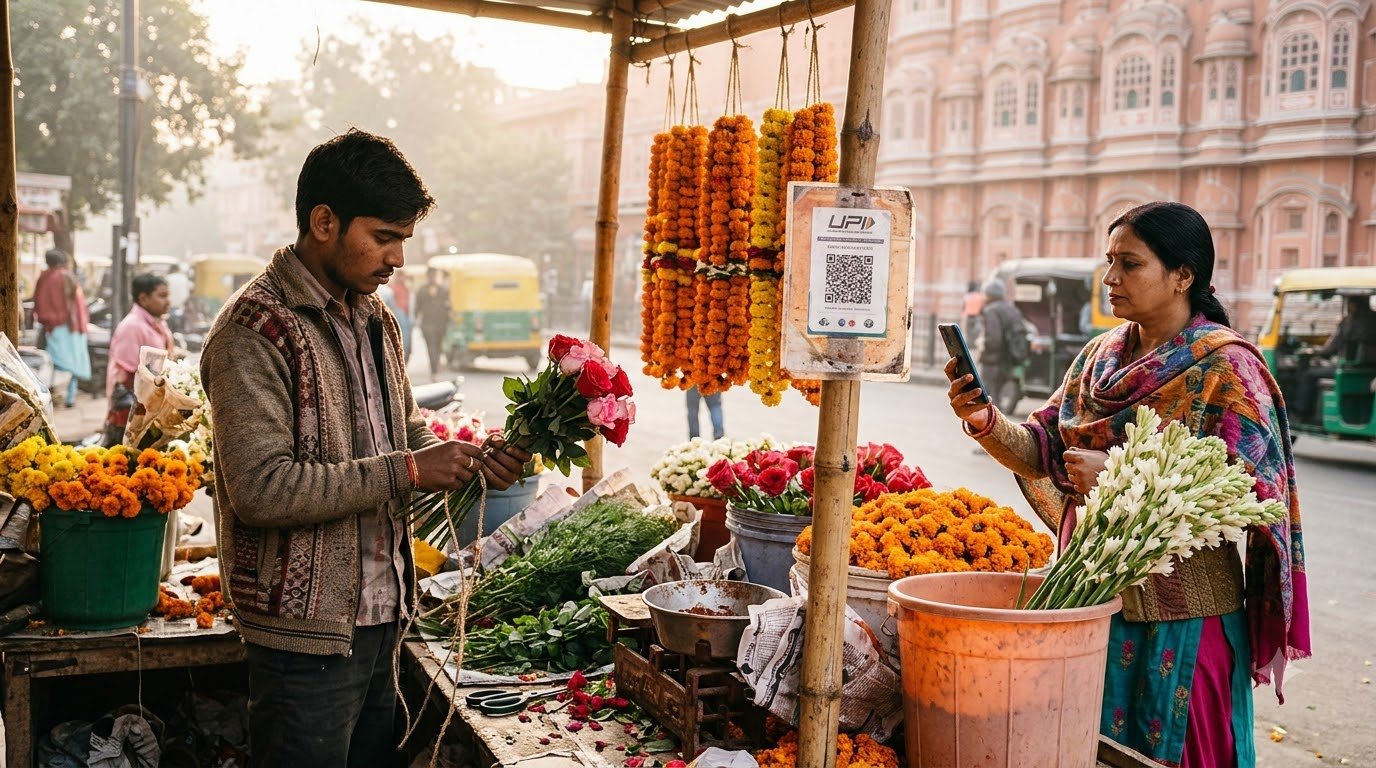
You can start a flower business in India with ₹15,000 to ₹50,000 if you begin with a small stall, a home-based bouquet service or a daily puja flower subscription. The money you need is small. The real challenge is that your stock starts dying the day you buy it.
So think of it this way: a flower business is a race against time. Buy only what you can sell, sell it within a day or two, and lock in customers who buy regularly. Below is a step-by-step plan, two worked calculations, and the traps that quietly kill most new flower sellers.
The short answer: 6 things you need to start
- A business model that fits your location and time (stall, subscription, bouquets, events or farming).
- A reliable wholesale supplier you visit early in the morning.
- A pricing method that includes wastage, not just flower cost.
- Basic registrations: Udyam, local shop or trade licence, and GST if it applies to you.
- Simple storage: buckets, clean water, shade and a fixed routine.
- A base of regular customers, so you are not depending only on walk-ins.
Now let us go through each one properly.
Step 1: Choose the right flower business model
Selling flowers near a temple and decorating a wedding mandap are very different jobs. Here is a quick comparison.
| Model | Rough starting cost | Best for | Watch out for |
|---|---|---|---|
| Stall near a temple, hospital or market | ₹15,000 to ₹50,000 | Someone who can secure a busy spot | Rent, wastage, local competition |
| Daily puja flower subscription | ₹10,000 to ₹40,000 | Homemakers, students, part-timers near big societies | Low profit per customer, early mornings |
| Home-based bouquets and gifting | ₹30,000 to ₹1.5 lakh | Creative people good with WhatsApp and Instagram | Delivery cost, slow weekdays |
| Wedding and event decoration | ₹1 lakh to ₹5 lakh | People with a small team and planner contacts | Late payments, seasonal income |
| Flower farming | Depends on land, water and setup | Families with land and farming experience | Weather, price crashes, long wait for income |
These are rough illustrative ranges. Your city, spot and scale can change them a lot.
A practical tip: many successful sellers run two models together. A stall owner adds a morning subscription route. A bouquet maker takes small decoration jobs in wedding season. One side gives steady cash; the other gives bigger orders.
Step 2: Test demand before you rent anything
Spend two weeks testing before you commit to rent, a fridge or printed visiting cards.
Say Priya, a 29-year-old in Guwahati, wants to start a puja flower subscription. She posts a simple message in two housing society WhatsApp groups: fresh puja flowers at your door by 7 am, ₹449 a month, first week trial. People pay a week’s amount by UPI to book.
If 30 families sign up, she has real proof. If only a handful respond, she can change the price, the timing or the area, and she has lost almost nothing.
The same idea works everywhere. Planning a stall? Set up a table near the temple on weekends first. Planning bouquets? Take ten paid orders from friends and their contacts before buying supplies in bulk.
Step 3: Find good wholesale suppliers
Your buying price decides your profit, so sourcing matters more than your shop design.
Most big cities have a wholesale flower market. Well-known ones include Mullick Ghat in Kolkata, the Ghazipur phool mandi in Delhi, Dadar in Mumbai and KR Market in Bengaluru. In smaller towns, there is usually a mandi area or a few big wholesalers who supply all the local shops.
- Go early. Wholesale markets often start before sunrise. The freshest flowers go first.
- Buy small at the start. For the first month, you are paying to learn. Learn cheaply.
- Check freshness properly. Look for firm stems, tight or half-open buds and no brown edges. Loose flowers should not feel soggy or smell sour.
- Stick with two or three wholesalers. Regular buyers get better stock, fair rates and help during festival rush.
- Write down prices daily. After a few weeks, you will know which days are cheaper and which flowers swing the most.
Later, when your daily volume is predictable, you can buy directly from farmers in nearby growing areas. You save on the middleman, but you take on transport and quality risk. Do it only once your demand is steady.
Step 4: Understand the wastage maths (this decides everything)
Most people calculate profit as selling price minus buying price. In flowers, that is dangerously incomplete, because some of what you buy will never be sold.
Say Rohit runs a stall near a hospital in Jaipur. He buys flowers worth ₹2,500 every morning and sells at about double his cost. His monthly fixed costs:
- Stall rent: ₹5,000
- Auto to and from the market: ₹120 a day, about ₹3,360 for 28 days
- Part-time helper: ₹8,000
- Wrapping paper, ribbons, rubber bands, covers: ₹2,640
Total fixed costs: ₹19,000 a month. Now compare two wastage levels.
| Wastage 15% | Wastage 30% | |
|---|---|---|
| Flowers bought per day | ₹2,500 | ₹2,500 |
| Flowers sold (at cost value) | ₹2,125 | ₹1,750 |
| Daily sales at double the cost | ₹4,250 | ₹3,500 |
| Gross margin per day | ₹1,750 | ₹1,000 |
| Gross margin for 28 days | ₹49,000 | ₹28,000 |
| Minus fixed costs | ₹19,000 | ₹19,000 |
| Monthly profit | ₹30,000 | ₹9,000 |
Same stall, same prices, same customers. Doubling the wastage cut Rohit’s profit by more than two-thirds.
A simple rule to remember: under 15 to 20% wastage, you have a business. Above 30%, you are mostly working to pay your wholesaler and landlord.
How to keep wastage low
- Buy based on what you sold yesterday, not on what you hope to sell.
- Take pre-orders and subscriptions, so part of your stock is already sold before you buy it.
- Sell slightly tired flowers as loose puja flowers or petals at a lower price instead of throwing them away.
- Offer a small evening discount on stock that will not survive till tomorrow.
- Record wastage every day. You cannot fix a number you do not track.
Why subscriptions are worth it even with thin margins
Back to Priya in Guwahati. With 50 subscribers at ₹449 a month, she earns ₹22,450. Her costs: flowers at about ₹9 per house per day (₹13,500 a month), leaf or paper pouches at ₹1 per house per day (₹1,500), and scooter fuel of around ₹1,500. Total ₹16,500, leaving her roughly ₹5,950.
That is not huge. But it takes about 90 minutes each morning, wastage is close to zero because every flower is pre-sold, and the income is predictable. Combine it with a stall or bouquet orders and it becomes a very useful base.
Step 5: Get the basic registrations done
You do not need heavy paperwork for a small flower business, but a few basics help you look credible and open doors later.
- Udyam registration: Free and online at udyamregistration.gov.in. It records you as a micro enterprise and helps with bank accounts and loans. Avoid agents who charge for it.
- Shop and Establishment registration or trade licence: Usually needed for a fixed shop or stall. Rules and fees vary by state and city, so check with your municipal corporation or state labour department.
- GST: Depends on your turnover, what you sell and whether you sell through online marketplaces, which often ask for a GST number. Loose fresh flowers and gift combos with chocolates or vases may be treated differently. Confirm with a CA or on cbic-gst.gov.in.
- Separate bank account and UPI QR: A business current account keeps your shop money apart from personal spending and builds a clean income record.
If you are planning flower farming, look at schemes from your state horticulture department and the National Horticulture Board (nhb.gov.in). Eligibility and support amounts change, so check the official pages before you plan your budget around a subsidy.
Step 6: Set up simple storage and handling
A cold room can wait. Good habits cannot.
- Use clean buckets and change the water daily.
- Trim rose and gerbera stems at an angle, and remove leaves that sit under water.
- Keep flowers out of direct sun and away from fruit stalls. Ripening fruit speeds up wilting.
- Wrap jasmine and other loose flowers in a damp cotton cloth, not a sealed plastic bag.
- Do not pile heavy bunches over delicate ones.
Once your sales are steady, a second-hand display fridge is often the best upgrade you can buy. It adds life to roses and exotics and directly cuts wastage. Buy it when your numbers prove you need it.
Step 7: Price from your costs, not from the shop next door
Copying the cheapest seller nearby is a quick way to work hard for nothing.
Take Aditi, who makes bouquets from home in Pune. For one mid-sized bouquet, her costs are about ₹230 for flowers, ₹60 for wrapping, ribbon and card, ₹80 for delivery and ₹40 as a wastage buffer. That is ₹410 before counting her time, phone bill or promotion.
Priced at ₹499, she makes under ₹90 for an hour of work. Priced at ₹799, she makes nearly ₹390 and can still offer what big apps cannot: custom colours, same-day changes and a handwritten note. Customers who want personal service will pay for it.
And do not give free delivery to everyone. Either include it in your price or charge it clearly. Delivery is where small online florists lose money without noticing.
Step 8: Build regular customers
Walk-in sales go up and down. Regular buyers make your income steady and your buying predictable, which also reduces wastage.
- Homes: daily or weekly puja flowers in large societies.
- Temples and pandals: daily garlands plus big festival orders.
- Hotels, restaurants and cafes: weekly table and reception flowers.
- Offices and clinics: reception arrangements changed every week.
- Wedding planners, caterers and decorators: they need dependable suppliers in peak season.
- Hospitals: a spot near the gate brings steady get-well bouquet buyers.
For marketing, start free. Create a Google Business Profile so you appear in nearby searches. Set up a WhatsApp Business catalogue with clear photos and prices. Post short reels of bouquets being made; the process is often more shareable than the final bouquet.
A marketer’s view on the big gifting apps
Large online gifting brands are not really selling flowers. They are selling occasions and urgency: midnight delivery, countdown timers, combos with cakes and teddies, and the gentle guilt of a forgotten anniversary.
You can use the honest version of this. Keep a simple list of your regular customers’ important dates and send a polite reminder a few days before. That one habit turns one-time buyers into repeat customers.
Also be careful with large aggregator platforms. They can bring orders, but commissions and strict delivery rules may leave you with very little margin. Check the full fee structure and calculate your profit on one real order before signing up.
Step 9: Plan for festivals and slow months
Demand for flowers in India follows the calendar. Roses spike in Valentine’s week. Marigolds, lotus and garlands rush during Navratri, Durga Puja, Diwali and Chhath. Onam, Pongal and wedding season keep sellers busy in many regions.
But wholesale prices also jump before these days, often sharply. Many beginners buy in panic the night before a festival and wake up to piles of unsold marigolds.
- Book quantities with your wholesaler one or two weeks ahead.
- Take advance payment for bulk and festival orders.
- Raise your prices when your costs rise. Customers expect festival rates.
- Save part of your festival profit for slow months, when heat or fewer events mean more wastage and less demand.
Step 10: Manage cash like a real business
- Keep a daily record of purchases, sales, wastage and expenses. Ten minutes every night is enough.
- Take advances for events. Late-paying event clients can wipe out a whole season’s profit.
- Avoid credit to other shops or decorators until they have a good payment track record with you.
- Keep a buffer of one to two months of fixed costs before you expand.
- Borrow carefully. For a fridge, delivery vehicle or shop, compare options like a Mudra loan on mudra.org.in and with your bank. Do not run a perishable business on credit cards or expensive personal loans.
Mistakes that sink new flower sellers
- Buying too much because the wholesale rate looks cheap. Unsold flowers are the costliest flowers you will ever buy.
- Decorating the shop before finding customers. Signboards and branding can wait. Proof of demand cannot.
- Copying competitors’ prices without knowing your own costs.
- Forgetting delivery and packaging costs in online orders.
- Taking event jobs without a written quote and advance.
- Not tracking wastage and then wondering where the money went.
Frequently asked questions
How much investment is needed for a flower business in India?
A small stall or puja flower subscription can usually start with ₹10,000 to ₹50,000, mainly for initial stock, buckets, wrapping material and a few weeks of rent. Home bouquet businesses need a bit more for packaging, good photos and delivery. Event decoration and farming need much more, so start small and grow once your numbers work.
How much can a small flower shop earn in a month?
It depends heavily on location, daily volume and wastage. As the example above shows, the same stall can earn around ₹30,000 a month at 15% wastage and under ₹10,000 at 30% wastage. Regular customers and pre-orders make the biggest difference to steady income.
Do I need GST registration to sell flowers?
Not always. It depends on your turnover, the exact products you sell and whether you sell through online marketplaces, which often require a GST number. Fresh loose flowers and gift combos may be treated differently, so check with a CA or the official GST portal before you start.
Can I run a flower business from home with no shop?
Yes. Puja flower subscriptions and made-to-order bouquets work well from home because you buy only for confirmed orders and pay no rent. You need a cool storage corner, early access to a supplier and a local delivery arrangement. Check your society rules if customers will come to collect orders.
Which flowers are most in demand in India?
Marigold, rose, jasmine, tuberose (rajnigandha) and chrysanthemum sell in most regions, mainly for puja, garlands and decoration. Jasmine is especially strong in the south, marigold drives festival demand in the north and east, and lotus peaks around Durga Puja and Diwali. For bouquets, roses, gerberas, carnations and lilies are the most popular.
Start small, track everything
A flower business in India is one of the rare businesses you can start with little money, test in two weeks and grow one customer at a time. You do not need a big loan or a fancy shop. You need an early alarm, a trusted wholesaler and the habit of writing down every rupee and every unsold bunch.
Find your first ten regular buyers before chasing a hundred walk-ins. Keep wastage low. If the numbers work small, they will usually work bigger too.
If you are comparing this with other small business ideas with low investment, explore our related IndiFinance guides before you decide.
This article is for educational purposes only and is not investment, tax or legal advice. Please check current rules and rates on official websites before acting.