Written and edited by Chandan Bhattacharjee
Editor, IndiFinance | MBA, Economics (Hons.) | Indian | Writes & Teaches Finance, Marketing, Business, Technology & AI
Independent editorial. No paid placements.
You’re sipping chai. Your phone buzzes.
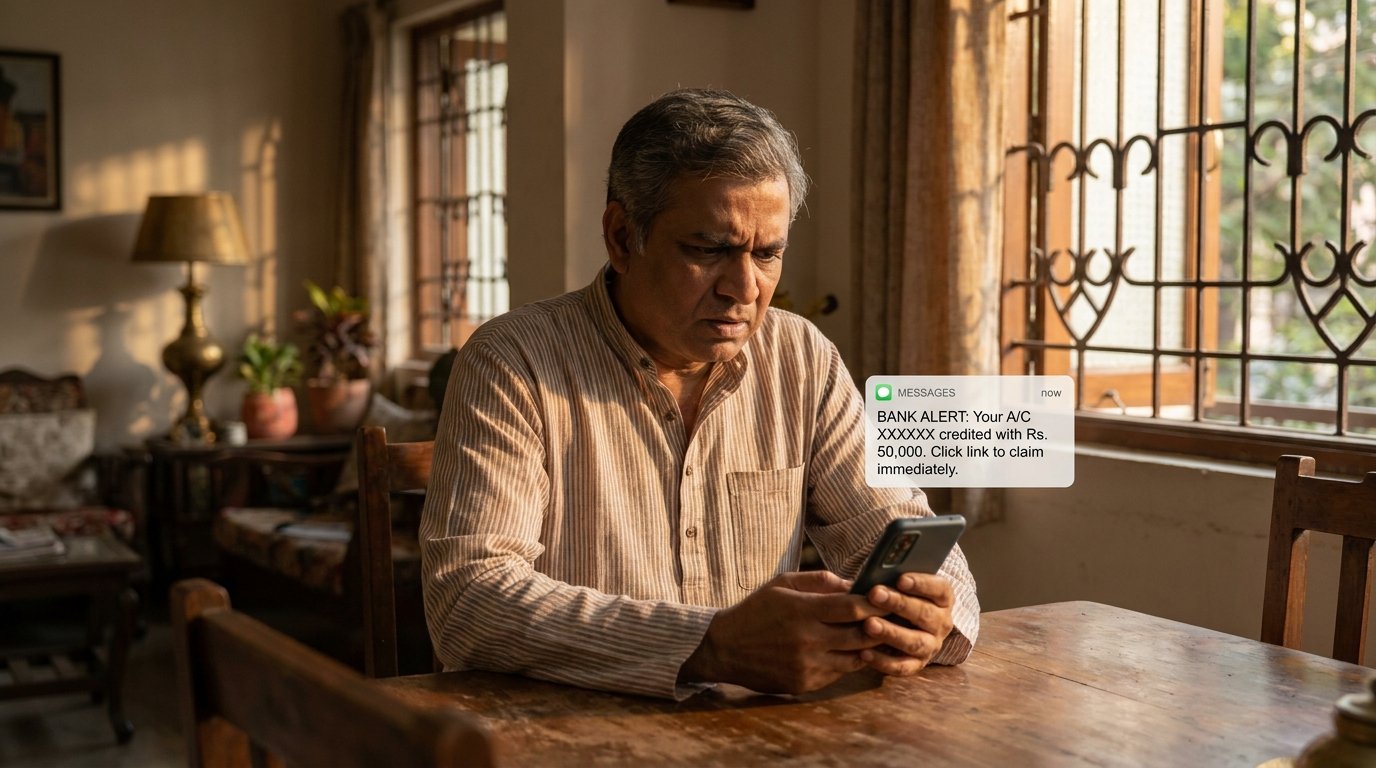
“Dear customer, your KYC will expire today. Click this link to update.” Your heart skips. You tap.
Three minutes later, ₹47,000 is gone from your account — gone to someone you’ve never met, in a city you’ve never visited.
This isn’t a horror story. This is a Tuesday in India in 2026.
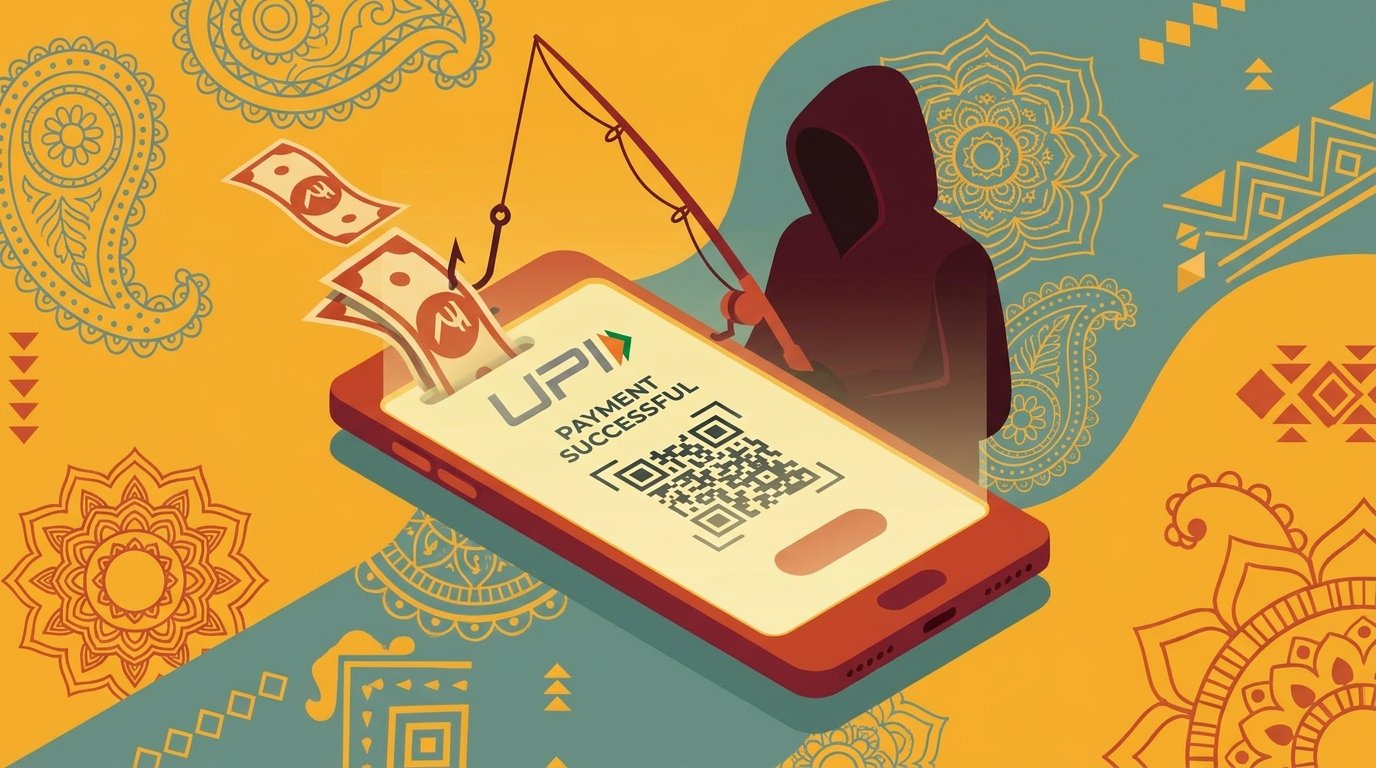
If you use UPI, online banking, WhatsApp, or even just a smartphone, cybersecurity in India is no longer a “techie” topic. It’s a survival skill — like knowing how to cross a Mumbai road or bargain in Sarojini Nagar.
And the scary part? Most of us think we’re too smart to get scammed. Until we don’t.
Why Cybersecurity in India Matters More Than Ever in 2026
India is the world’s second-largest internet market. Over 900 million of us are online. We pay for vada pav with UPI, file ITR on our phones, and trust OTPs more than we trust our cousins.
But here’s the uncomfortable truth: cyber fraud cases in India have exploded. The I4C (Indian Cyber Crime Coordination Centre) reported losses crossing thousands of crores in the last couple of years — and those are only the reported ones. Most victims are too embarrassed to file a complaint.
Why? Because the scams have gotten smart. They no longer say “Dear sir/madam, you have won Nigerian lottery.” Today, they sound like your bank. They look like Amazon. They speak Hindi, Tamil, and Marathi. They know your name, your last transaction, sometimes even your PAN.
That’s why every Indian — whether you earn ₹25,000 or ₹2.5 lakh a month — needs a basic cybersecurity playbook. This article is that playbook.
The Anatomy of an Indian Scam: How They Actually Get You
Forget the movies. Most scammers aren’t hooded hackers in dark rooms. They’re often regular-looking people in call centres in Jamtara, Mewat, or even abroad, working off scripts as polished as any IT helpdesk.
Here’s how a typical Indian scam unfolds:
- The Bait: An SMS, WhatsApp message, or call. “Your electricity will be cut tonight.” “Your parcel is stuck at customs.” “Congratulations, you’ve been selected for a part-time job.”
- The Urgency: You have 10 minutes. Pay ₹15 to reactivate. Click now or lose access.
- The Hook: A link to a fake website that looks exactly like SBI, HDFC, IRCTC, or India Post.
- The Kill: You enter your card number, OTP, or UPI PIN. Game over.
Imagine Ravi, a 28-year-old software engineer in Bengaluru earning ₹80,000/month. He’s smart. He codes in Python. He got a call from “Amazon” about a refund. The caller knew his recent order. Ravi installed an app to “verify.” That app was AnyDesk. By dinner, ₹1.2 lakh from his salary account was gone.
Being educated doesn’t save you. Being alert does.
UPI Scams: The Most Common Trap for Indians Today
UPI changed our lives. It also changed the scammer’s toolkit.
The most common UPI scams running in India right now:
- The “Wrong Transfer” Trick: Someone sends you ₹5,000 by “mistake” and begs you to return it. The original transaction was reversed via dispute — you lose your money.
- The Collect Request Scam: A seller on OLX asks you to “accept” a payment. You’re actually sending money by entering your UPI PIN.
- QR Code Fraud: You scan a QR to “receive” money. You don’t receive — you pay.
- Fake Customer Care: You Google “PhonePe customer care.” You call the first number. It’s a scammer’s number, ranked through SEO tricks.
Golden rule: You never need to enter your UPI PIN to receive money. Ever. If anyone asks you to, run.
OTP, KYC, and the Phone Call That Could Cost You Lakhs
Three letters can ruin your year: O-T-P.
Your OTP is the literal key to your money. A bank will never — and we mean never — ask for it. Not even if the caller says “madam, I’m calling from RBI head office.” RBI doesn’t call you. Your bank doesn’t call you to ask for OTPs, CVVs, or PINs.
The same goes for KYC. Real KYC updates happen at the branch, on the official app, or via the official website you typed yourself. Not via a random link on WhatsApp.
One mini-example: Priya, a 32-year-old teacher in Lucknow, got a call from “SBI” saying her account would be frozen. She panicked, shared an OTP “just to verify.” ₹68,000 disappeared in 90 seconds. Her real bank later told her — they would have never called like that.
If you remember one thing from this article, let it be this: OTP shared = money lost.
WhatsApp, Telegram, and the New Wave of Job and Investment Scams
The new playground for scammers? WhatsApp and Telegram.
You’ve seen them. “Earn ₹5,000 per day by liking YouTube videos.” “Join our stock tips group for guaranteed 30% returns.” “Hi, I’m Sneha from a recruitment company, I have a part-time opportunity.”
The script is brilliant. They pay you ₹200 for the first task. Maybe ₹500 for the second. You feel like a genius. Then they ask you to “invest” ₹10,000 to unlock bigger tasks. You do. Returns vanish. So does the group.
This is called a task-based fraud, and it has wiped out lakhs of crores from middle-class Indians — students, homemakers, even retired folks.
Equally dangerous: fake stock market tip groups. SEBI does not allow guaranteed-return promises. Anyone promising 2x in a month is either lying or doing something illegal.
Public Wi-Fi, Charging Points, and Other Silent Killers
Free Wi-Fi at the airport? Tempting. Also risky.
Public Wi-Fi can be a goldmine for hackers who set up fake networks named “Free_Airport_WiFi” and watch everything you do — including logging into your net banking. The technical term is a man-in-the-middle attack. The practical term is: don’t do it.
Same with public USB charging points at malls, stations, and cafes. Some carry malware that can copy your data the moment you plug in. It’s called juice jacking, and yes, it’s a real thing in India now.
- Rupee at 97 per Dollar: What the Fall Means for Your Money (and What to Do About It) The rupee is near 97 per dollar and RBI has tightened forex rules. Here is how…
- What Is EPFO? Your Complete, No-Jargon Guide to PF, Pension and Withdrawals EPFO runs the PF account cut from your salary every month. Learn how contributions are split,…
- Why Every Indian Should Understand Macroeconomics (Even If You Hated Economics in School) Inflation, repo rate, the rupee and GDP growth quietly decide your EMI, your salary hike and…
- Dollar vs Rupee in 2026: How a Weak Rupee Quietly Eats Your Salary The dollar rupee rate impact isn't just news for traders. It quietly raises your petrol bill,…
What to do instead:
- Use your mobile data for banking transactions. Always.
- Carry a power bank instead of using public USB ports.
- If you absolutely must use public Wi-Fi, switch on a trusted VPN first.
- Turn off Bluetooth and “auto-connect to known networks” when out.
Social Media: The Free Info You’re Giving Scammers
Posted your boarding pass on Instagram? You just gave away your PNR.
Shared your full date of birth on Facebook? That’s one of the security questions banks ask.
Tagged your location at a wedding for five days straight? You just told burglars your house is empty.
Cybersecurity isn’t just about clicks and passwords. It’s about information hygiene. The less of you that’s freely available online, the harder you are to target.
Quick audit you can do today:
- Lock down your Instagram and Facebook to friends only.
- Remove your phone number from your public bio.
- Don’t post live travel updates — share photos after you return.
- Be careful what you say in WhatsApp groups with people you don’t know personally.
Common Mistakes Indians Make (That Cost Them Their Savings)
Let’s get blunt. Most cyber fraud victims in India aren’t “stupid.” They just make a few avoidable mistakes — the kind you might be making right now.
- Using the same password everywhere: Your Gmail, Zomato, and net banking shouldn’t share a password. One leak = total game over.
- Saving card details on every random website: If a small shopping site gets hacked, your card is out there.
- Ignoring software updates: Those annoying iOS and Android updates? They fix security holes. Skipping them is like leaving your front door open.
- Trusting caller IDs: Caller ID can be spoofed. “SBI” on your screen doesn’t mean SBI is calling.
- Downloading APKs from random links: Always install apps from Play Store or App Store. APK files from WhatsApp = malware.
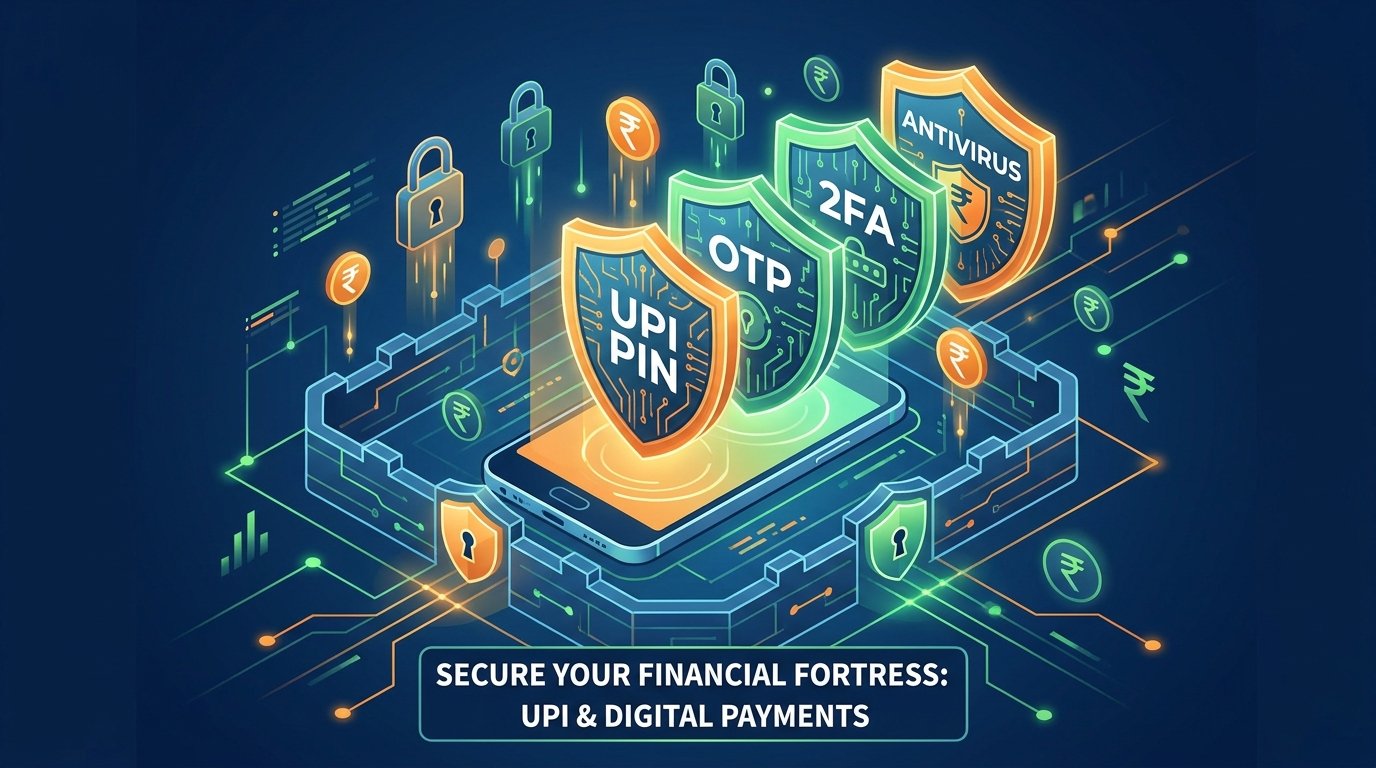
- Not enabling 2-factor authentication (2FA): Gmail, Instagram, banking — turn on 2FA today. It takes 60 seconds and could save lakhs.
- Believing “government schemes” links: No real scheme requires you to pay processing fees through a personal UPI ID.
- Letting parents handle banking alone: Senior citizens are the #1 target. Sit with your parents for 30 minutes and walk them through the basics.
Most of these aren’t tech mistakes. They’re trust mistakes. And trust is the currency scammers are mining.
Your 7-Day Cybersecurity Action Plan
Reading is great. Doing is better. Here’s a step-by-step plan you can actually finish in one week:
- Day 1 — Audit your passwords. Use a password manager (like Bitwarden or 1Password). Generate unique, strong passwords for at least your email, primary bank, UPI app, and social media.
- Day 2 — Turn on 2FA everywhere. Gmail, WhatsApp, Instagram, Facebook, Amazon, your net banking. Use an authenticator app, not just SMS, where possible.
- Day 3 — Set transaction limits. Lower your UPI daily limit to something realistic (₹25,000 or ₹50,000). Lower your debit and credit card online limits the same way.
- Day 4 — Clean your phone. Uninstall apps you haven’t used in 6 months. Remove AnyDesk, TeamViewer, or any remote-access app you didn’t intentionally install.
- Day 5 — Lock your SIM. Enable SIM PIN on your phone. If your SIM is stolen or cloned, scammers can’t take OTPs without the PIN.
- Day 6 — Talk to your family. Sit with your parents and grandparents. Show them what a phishing message looks like. Save 1930 (the cyber crime helpline) in their contacts.
- Day 7 — Save the emergency numbers. Save 1930 (national cyber crime helpline) and the website cybercrime.gov.in in your bookmarks. If something goes wrong, the first 24 hours are critical to freeze the money.
Do this once. You’ll sleep better for the next ten years.
What To Do If You’ve Already Been Scammed
Take a breath. Don’t panic-delete things. Don’t be embarrassed. You’re not alone — millions of Indians are scammed every year, including doctors, lawyers, and IIT graduates.
Here’s the exact sequence:
- Call 1930 immediately. This is the national cyber crime reporting helpline. The faster you report, the higher the chance of freezing the fraudster’s account.
- File a complaint at cybercrime.gov.in. Upload screenshots, SMS, transaction IDs — everything.
- Inform your bank. Most banks have a fraud helpline. Block your cards and UPI immediately.
- File an FIR at your local police station. Even if it feels useless, this paper trail matters for insurance and any future recovery.
- Change every related password. Email, banking, social media — assume everything is compromised.
Banks in India, under RBI rules, may refund money if you report within 3 working days for unauthorised electronic transactions where you weren’t at fault. So speed matters. Don’t delay because you’re ashamed. Shame is expensive; action is free.
Building a Long-Term Cybersecurity Mindset
Tools change. Scams evolve. AI-generated voice cloning, deepfake video calls, and “digital arrest” scams are already here. Tomorrow there will be something else.
So the real shield isn’t a single app or trick — it’s a mindset:
- Pause before you click. Five seconds of thinking has saved more money in India than any antivirus.
- Verify on a second channel. Got a call from “your bank”? Hang up. Call the number on the back of your debit card.
- Assume urgency is a red flag. Real banks and government departments don’t operate in 10-minute deadlines.
- Be the family helpdesk. If you’re reading this, you’re the most digital-savvy person in your family. Act like it.
Treat your data like you treat your gold. You wouldn’t leave a tola of gold on the bonnet of your car. Don’t leave your OTP in a WhatsApp message either.

Frequently Asked Questions About Cybersecurity in India
What is the fastest way to report a cyber fraud in India?
Call 1930, the national cyber crime helpline, the moment you realise something is wrong. Then file a detailed complaint at cybercrime.gov.in with all screenshots and transaction IDs. Reporting within the first few hours dramatically increases the chance of your bank freezing the fraudster’s account before the money is withdrawn.
Is UPI safe to use in India?
Yes, UPI itself is one of the safest payment systems in the world. The weak link is almost always the user — sharing OTPs, scanning unknown QR codes, or entering UPI PIN to “receive” money. As long as you remember that your PIN is only for sending money, UPI is extremely safe for daily use.
Will my bank refund money if I’m scammed?
It depends. As per RBI guidelines, if you report an unauthorised transaction (where you didn’t share OTP/PIN willingly) to your bank within 3 working days, your liability is usually zero. But if you shared your credentials, even by mistake, recovery becomes much harder. Speed of reporting is everything.
Are antivirus apps on my phone really necessary?
For most Indian users with iPhones or updated Android phones who only download apps from the official store, a separate antivirus is not essential. What matters more is keeping your OS updated, avoiding APK files from WhatsApp, and not installing remote-access apps like AnyDesk on someone’s instructions. Common sense beats most antivirus apps.
How can I protect my elderly parents from online scams?
Sit with them for 30 minutes. Lower their UPI and card transaction limits. Enable SMS alerts for every debit. Save 1930 in their contacts. Tell them one simple rule: “If anyone on the phone creates panic and asks you to share an OTP or click a link, hang up and call me.” That one sentence has saved many Indian families lakhs of rupees.
What is a “digital arrest” scam and how do I avoid it?
In a digital arrest scam, fraudsters pretend to be CBI, police, or customs officers on a video call and claim a parcel or bank account in your name is linked to a crime. They keep you on call for hours, threaten arrest, and pressure you to transfer money. The truth: no Indian agency arrests anyone over a video call. Disconnect, breathe, and call 1930.
The Bottom Line: Your Money Deserves a Locked Door
Here’s the warm, slightly tough-love truth: in 2026, taking cybersecurity in India seriously is not optional. It’s as basic as wearing a seatbelt or locking your front door at night.
You’ve worked hard for every rupee. You’ve watched SIPs grow, EMIs shrink, and FDs mature. Don’t let a 90-second phone call wipe that out. Don’t let one greedy click steal what years of discipline built.
Bookmark this article. Forward it to your parents, your spouse, your younger cousin who just got their first salary. Then go explore our other guides — like our beginner’s SIP guide, our emergency fund playbook, and our breakdown of smart credit card habits. Because protecting your money and growing your money are two sides of the same coin.
Stay alert. Stay calm. And keep building. Your future self will thank you.