Written and edited by Chandan Bhattacharjee
Editor, IndiFinance | MBA, Economics (Hons.) | Indian | Writes & Teaches Finance, Marketing, Business, Technology & AI
Independent editorial. No paid placements.
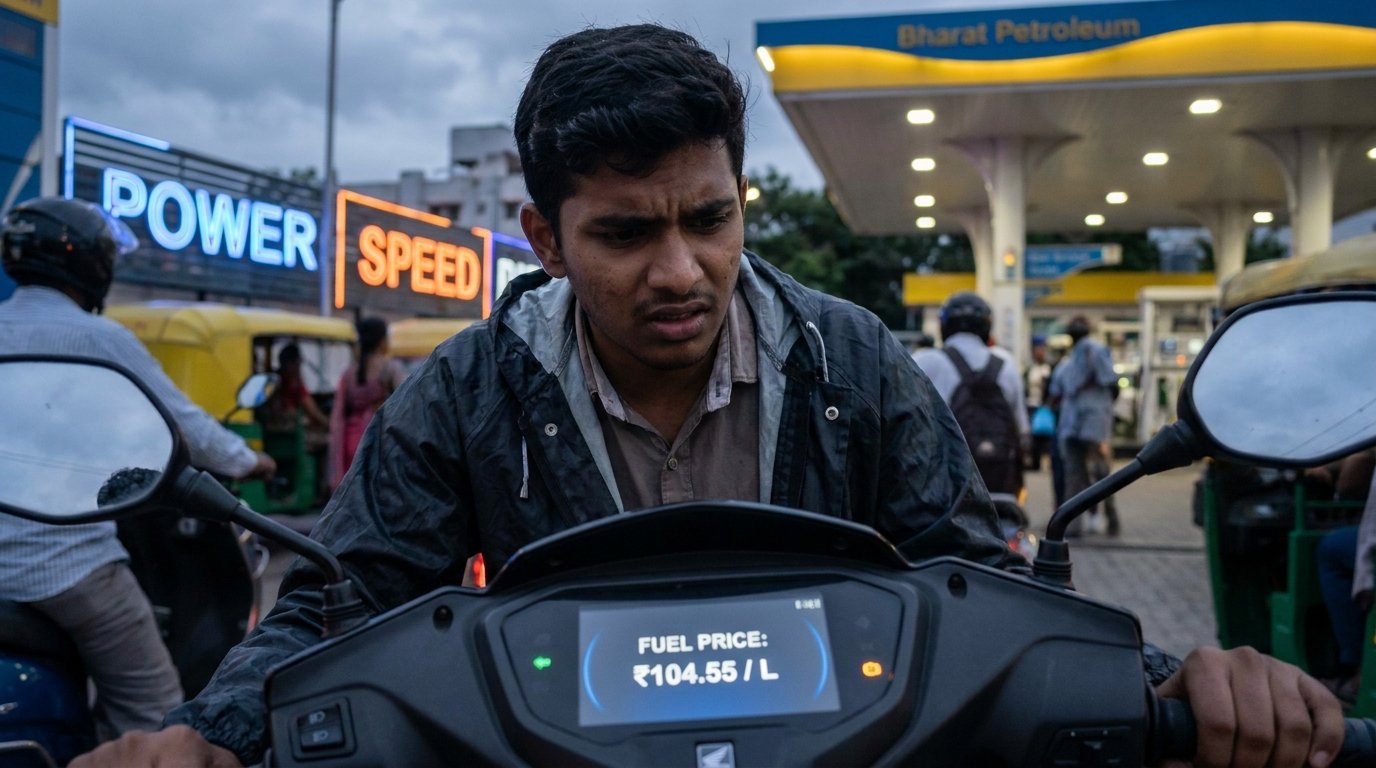
You filled petrol last month for ₹105 a litre. This week it’s ₹108. Your iPhone got costlier by ₹7,000 overnight. Your cousin in the US is suddenly sending bigger gifts home.
What changed? Not your salary. Just one number on a screen — the dollar rupee rate.
And that one number is quietly rewriting your monthly budget without asking you.
In 2026, the rupee is hovering around ₹84-₹86 per US dollar — a level that felt unthinkable just five years ago when it was around ₹70. That gap isn’t just a headline for stock traders. It’s hitting your wallet, your dreams of a foreign trip, your child’s MBA in the US, and even the cost of your weekly Zomato order.
Let’s break down the real dollar rupee rate impact on you — in plain Hindi-English, with examples you’ll actually recognise.
What Does the Dollar Rupee Rate Actually Mean?
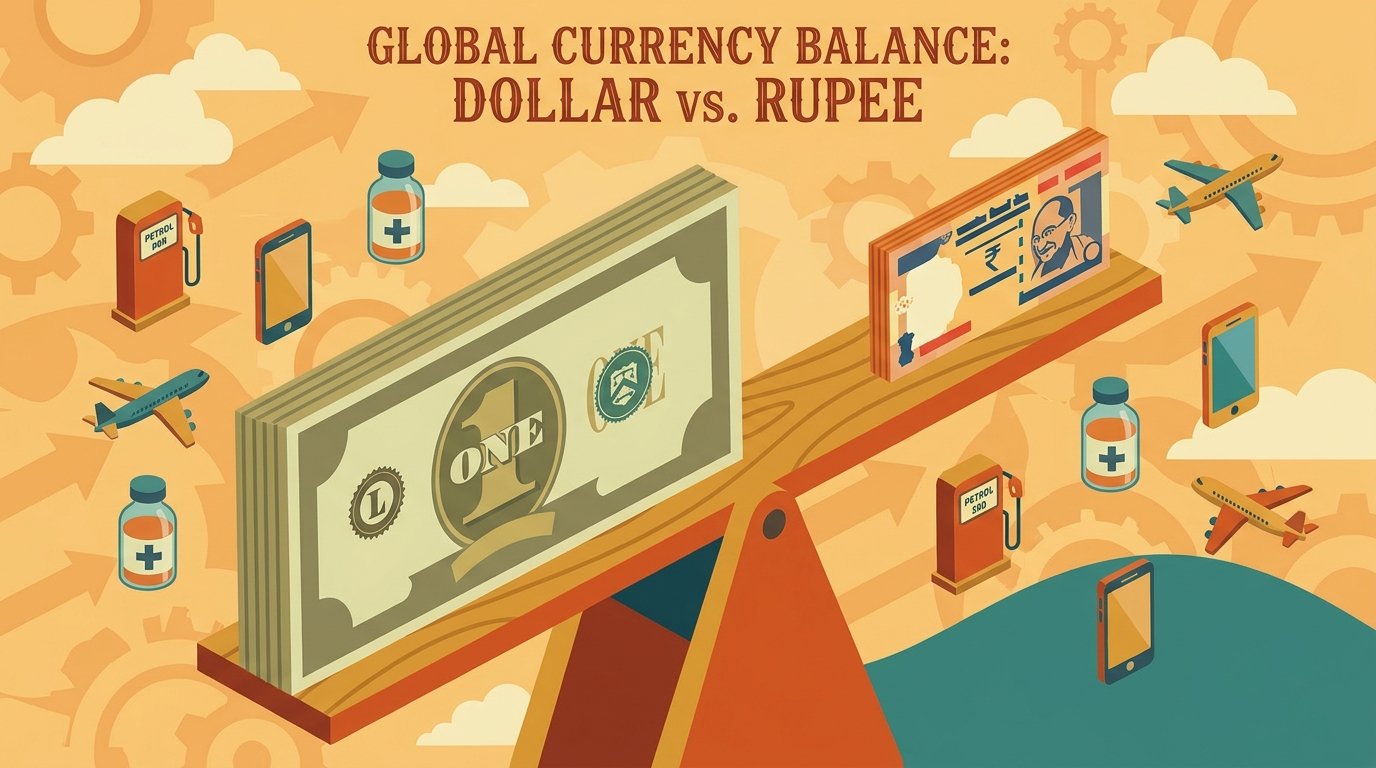
Think of it like this. Every time India buys something from another country — crude oil, smartphones, medicines, machinery — we pay in US dollars. Not in rupees.
So if 1 dollar costs ₹70, we pay ₹70 for every $1 of imports. If 1 dollar costs ₹85, we pay ₹85 for the exact same thing.
The product didn’t get better. The rupee just got weaker. And someone has to absorb that extra ₹15. Spoiler: it’s almost always you.
A weak rupee is a hidden tax on every Indian household — you never see it on your payslip, but you pay it every single month.
1. Your Petrol and Diesel Bill Quietly Goes Up
India imports over 85% of its crude oil. Crude is priced in dollars. So when the rupee falls, even if global oil prices stay flat, our petrol gets costlier.
Imagine Ravi, a 28-year-old software engineer in Bengaluru. He rides 40 km daily on his bike. A ₹3 hike per litre means he pays roughly ₹500 extra a month. That’s a Netflix subscription, gone — just because of forex.
And it doesn’t stop at petrol. Diesel goes up too. Which means trucks charge more. Which means your onions, tomatoes and Amazon deliveries cost more. This is called imported inflation, and it’s the most invisible part of the dollar rupee rate impact.
2. Foreign Education Just Became a Bigger EMI
Have a kid (or a sibling) dreaming of studying in the US, UK or Canada? Brace yourself.
A US Master’s program that costs $60,000 in tuition + living expenses:
- At ₹70/dollar = ₹42 lakh
- At ₹85/dollar = ₹51 lakh
That’s ₹9 lakh extra for the exact same degree, the exact same hostel, the exact same biryani in New Jersey. Education loans get heavier. EMIs stretch longer. Parents dip deeper into their PPF and FD savings.
3. Your Phone, Laptop and Gadgets Get More Expensive
iPhones, MacBooks, gaming laptops, even most Android phones — the components are imported. Priced in dollars. Assembled in India, sure, but the bill of materials is still dollar-denominated.
Every time the rupee slides by ₹1, expect gadget prices to creep up within 2-3 months. The brands rarely announce it loudly. They just quietly launch the “new model” at ₹5,000-₹10,000 more.
Even your Netflix, Spotify, ChatGPT Plus and Adobe subscriptions get repriced upward — because those companies bill in dollars and convert.
4. Foreign Trips Are No Longer Cheap
Dubai, Thailand, Bali, Europe — the Indian middle-class travel dream is real. But a weak rupee makes it a luxury again.
A 5-day Thailand trip that cost ₹60,000 in 2019 now easily crosses ₹90,000-₹1 lakh. Hotels, flights, food, shopping — all hit by the same exchange rate. Even your forex card top-up gives you fewer dollars per rupee.
Pro tip: if you’re planning an international trip, book flights and hotels early in INR-locked deals, and load your forex card in tranches when the rupee shows temporary strength.
5. But Wait — Some Indians Actually GAIN
Here’s the counter-intuitive truth nobody on WhatsApp forwards tells you.
- Rupee at 97 per Dollar: What the Fall Means for Your Money (and What to Do About It) The rupee is near 97 per dollar and RBI has tightened forex rules. Here is how…
- What Is EPFO? Your Complete, No-Jargon Guide to PF, Pension and Withdrawals EPFO runs the PF account cut from your salary every month. Learn how contributions are split,…
- Why Every Indian Should Understand Macroeconomics (Even If You Hated Economics in School) Inflation, repo rate, the rupee and GDP growth quietly decide your EMI, your salary hike and…
- Cybersecurity in India: 11 Brutal Truths Before You Lose Your Savings From UPI scams to fake job links on WhatsApp, cybersecurity in India has become a daily…
A weaker rupee is great news if:
- You’re an IT/freelance professional earning in dollars. Your ₹ income just got a raise without a promotion.
- You have NRI relatives sending money home. Each dollar now becomes more rupees.
- You work in export sectors — IT services, pharma, textiles, gems & jewellery. Your company earns more, which can mean better bonuses.
- You invested in US stocks or international mutual funds via Indian platforms. Your returns get a forex boost.
So the dollar rupee rate impact isn’t one-sided. It’s a tug-of-war — and which side you’re on depends on where your money comes from and where it goes.
6. Your Loans and EMIs Could Get Pricier Too
To defend the rupee, the RBI sometimes raises interest rates or keeps them high. Higher repo rate = higher home loan, car loan, personal loan EMIs.
If you have a ₹50 lakh home loan, even a 0.5% rate hike adds nearly ₹1,500-₹2,000 to your monthly EMI. Multiply that over 20 years — it’s a serious wealth leak.
This is why tracking RBI repo rate changes matters even if you don’t read the business pages.
7. Gold Gets Costlier — and So Does Your Wedding Budget
Gold is priced internationally in dollars. India imports almost all its gold. So a weak rupee = costlier gold, even if global gold prices don’t move.
For an Indian family planning a wedding, this is brutal. A 100-gram gold purchase that cost ₹5 lakh a few years ago now crosses ₹7-₹8 lakh easily — and forex plays a quiet role in that jump.
Common Mistakes Indians Make When the Rupee Falls
Most people either panic or ignore. Both are wrong. Here’s what to avoid:
- Panic-buying dollars or US stocks at the peak of a rupee crash. You’re buying high.
- Cancelling SIPs in Indian equity funds because “the market is bad”. Equity SIPs are exactly how you fight long-term inflation.
- Hoarding cash in a savings account earning 3%. Inflation is eating it at 6%.
- Ignoring international diversification entirely. 100% India-only portfolios miss the dollar hedge.
- Believing WhatsApp forwards that the rupee will “crash to ₹150”. Currencies move on fundamentals, not forwards.
Your 7-Step Action Plan This Week
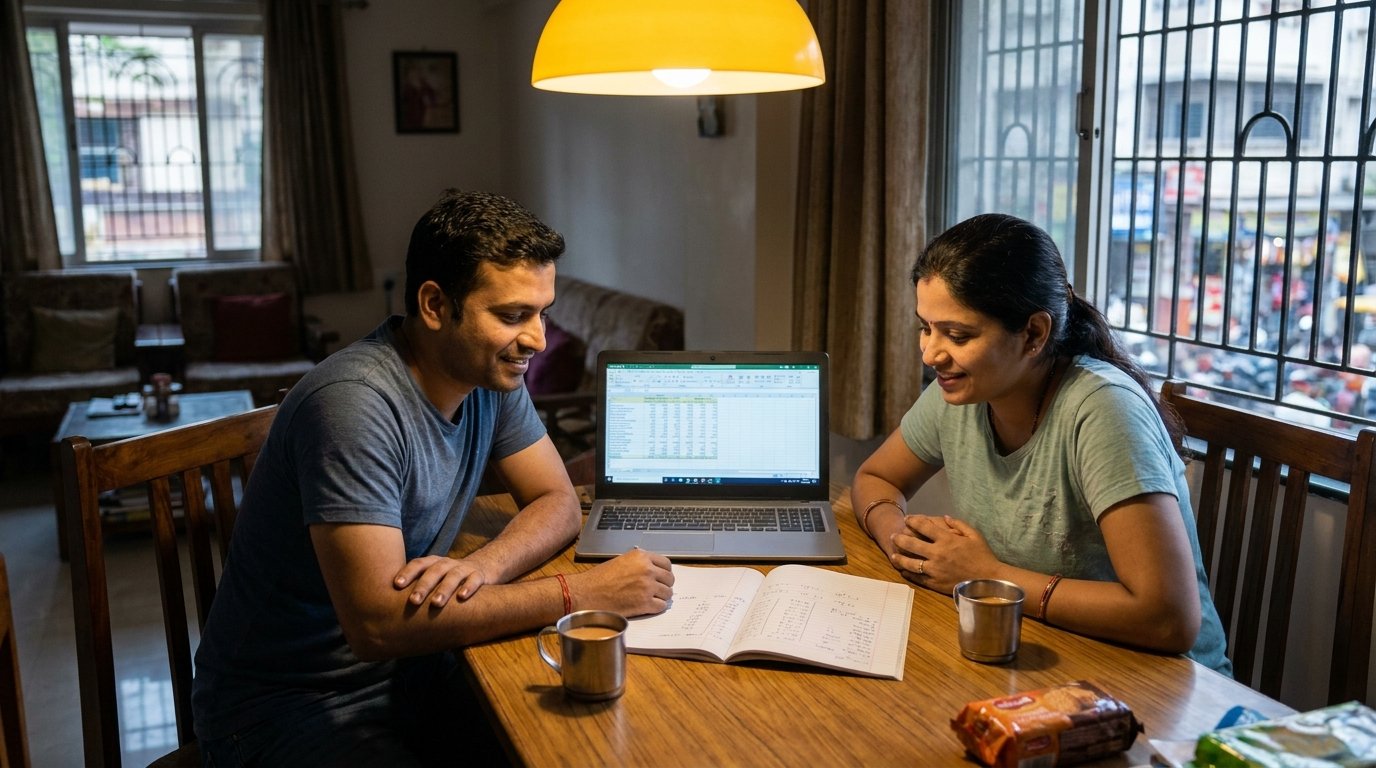
Stop doomscrolling. Do this instead:
- Audit your dollar-linked expenses. Petrol, gadgets, subscriptions, foreign travel plans. Know what you’re exposed to.
- Start or continue an equity SIP — at least ₹2,000-₹5,000/month in a diversified mutual fund. Equity beats inflation over 10+ years.
- Add 5-15% international exposure. Look at international mutual funds or US ETFs available via Indian platforms.
- Keep 5-10% in gold — Sovereign Gold Bonds (SGBs) or gold ETFs, not just jewellery.
- If you earn in dollars, remit smartly. Don’t convert every month at random rates — batch and time it.
- Build an emergency fund of 6 months’ expenses in a liquid fund or high-yield FD. Forex shocks need cash buffers.
- Lock big foreign purchases early. Booking foreign education or travel? Buy forex in tranches when the rupee shows brief strength.

Frequently Asked Questions
Why does the Indian rupee keep falling against the dollar?
Multiple reasons — India imports more than it exports (trade deficit), foreign investors sometimes pull money out, US interest rates stay high, and global crude oil prices rise. When dollars leave India faster than they come in, the rupee weakens.
Will the rupee ever become stronger than the dollar?
Realistically, no — not in our lifetime. The US dollar is the world’s reserve currency, and India is still a developing economy with a trade deficit. A gradual, controlled rupee depreciation is actually normal for growing economies and not a sign of disaster.
Should I invest in US stocks because the rupee is falling?
Some international exposure (5-15% of your portfolio) is healthy for diversification. But don’t go all-in just because of recent currency moves. Indian equities have historically delivered strong rupee returns and remain the core of any long-term portfolio.
How does a weak rupee affect my mutual fund returns?
It depends on the fund type. International funds investing in US stocks benefit from a weaker rupee. Indian equity funds are mostly unaffected directly, but companies with heavy import costs may see lower profits, while exporters gain.
Is it a good time to buy dollars or forex cards in 2026?
Only buy forex for real needs — travel, education, foreign payments. Avoid speculative dollar hoarding. If you have a foreign trip planned in 3-6 months, buy forex in 2-3 tranches instead of all at once to average your rate.
How does the dollar rupee rate impact the common man’s daily life?
It quietly raises petrol, diesel, cooking gas, imported gadgets, gold, foreign travel and even Netflix subscriptions. It also influences inflation and RBI’s interest rate decisions, which affect your home loan EMI. Almost every Indian feels it — most just don’t connect the dots.
The Bottom Line: Don’t Fear the Rupee, Outsmart It
The dollar rupee rate impact isn’t a temporary headline. It’s a permanent feature of being an Indian consumer and investor in a globalised world.
You can’t control the exchange rate. But you absolutely can control how you save, where you invest, and how you spend. A diversified portfolio, a disciplined SIP, a smart emergency fund, and a little bit of gold and international exposure — that’s your real shield.
The rupee will keep doing what currencies do. Your job is to keep building a financial life that doesn’t flinch every time the dollar sneezes. Start today. Your future self will quietly thank you.
Want to go deeper? Read our guides on starting your first SIP, investing in US stocks from India, and choosing between SGBs and gold ETFs.